++++
++++


++++++
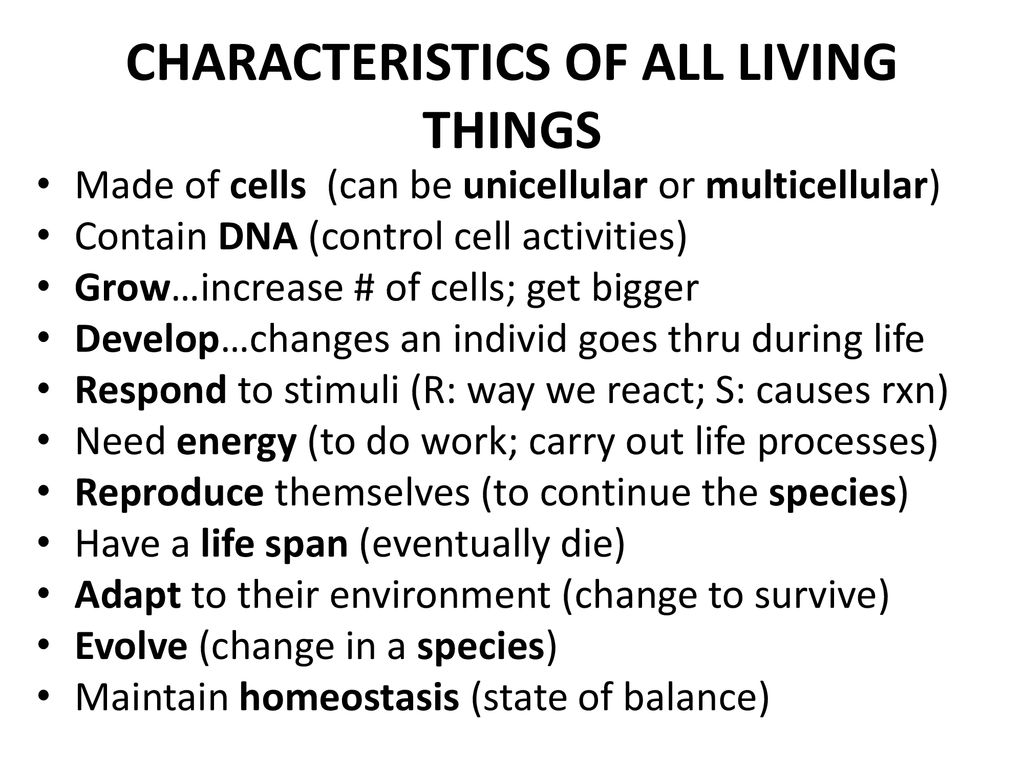
Main Characteristics of Living Things
- Organisms composed of cells.
- Capacity for growth and reproduction.
- Response to environmental stimuli and changes.
- Use of energy to maintain vital functions.
- Genetic inheritance and evolution over time.
- Homeostasis, maintaining internal balance.
- Adaptation to the environment and survival.
- Chemical composition based on carbon.
- Interaction with other living beings and the environment
- Exhibit variability and biological diversity.
+++ Living organisms are indeed made of cells, and within those cells are genes, chromosomes, and various molecules. Cells are the basic units of life, and all living things are composed of one or more cells. Genes, which are segments of DNA, carry the instructions for building and maintaining an organism. These genes are organized into structures called chromosomes, which are found within the cell’s nucleus. Molecules, like DNA and proteins, are the building blocks of cells and carry out various functions essential for life. ++
+++Chromosomes are thread-like structures found in the nucleus of cells that carry genetic information in the form of DNA. They are essential for cell division and heredity, ensuring that genetic material is accurately copied and passed on to new cells. Humans typically have 23 pairs of chromosomes, totaling 46, with one set inherited from each parent.

https://www.labtestsguide.com/chromosome
+++
Living organisms use nutrients as a source of energy to perform essential body functions. These nutrients, primarily carbohydrates, proteins, and fats, are broken down during metabolism to release energy, which is then used for various cellular processes, including growth, repair, and movement. Additionally, other vital nutrients like vitamins and minerals support these functions by acting as coenzymes and contributing to structural components.
+++++
1+ Living organisms are organised by hierarchical systematic orders: Atoms → molecules → organelles → cells → tissues → organs → organ systems → organisms
2+ Living organisms are indeed made of one or more cells, and within those cells are genes, chromosomes, and various molecules.
3+ Living organisms use and rely on nutrients like carbohydrates, proteins, and fats, along with vitamins and minerals, as sources of energy to fuel essential bodily functions such as growth, repair, and movement.
4+ Living organisms can detect and respond to Stimuli (Sensitivity) and react to changes in their internal or external environment to ensure survival by enabling adaptation to changing conditions.
5+ Living organisms grow and develop based on specific genetic instructions. They increase in cell size and/or number (growth) and undergo a series of changes throughout their life cycle. Development involves the differentiation and specialization of cells, which leads to the formation of a more complex organism.
Function: Growth allows organisms to reach maturity and perform their functions effectively. Development ensures the formation of specialized structures and functions necessary for survival and reproduction.
6+ Living organisms have the ability to produce new individuals of their own kind, and the transmission of genetic information from one generation to the next ensures the continuation of their species by (DNA or RNA) from parent to offspring. This can be asexual (involving a single parent) or sexual (involving two parents).
7+
8+ Differentiation from Non-living: Non-living things may increase in size, but this typically occurs through accretion (the addition of material externally, such as crystal growth) rather than internal, organized cellular processes.
Non-living: Non-living things do not undergo programmed development or differentiation.
9+
10+
+++++
Here’s a comprehensive overview of the key characteristics and functions of all living organisms, including how these features distinguish them clearly from non-living entities:
???? Key Characteristics and Functions of Living Organisms
All living organisms, regardless of their complexity, share several fundamental traits:
1. Cellular Organization
- Definition: All living organisms consist of one or more cells.
- Significance:
- The cell is the basic structural and functional unit of life.
- Cells organize into tissues, organs, organ systems, and complete organisms in multicellular life.
- Example:
- Single-celled organisms (bacteria, protozoa)
- Multicellular organisms (plants, animals, fungi)
2. Metabolism
- Definition: The chemical processes through which organisms convert nutrients into energy and maintain their bodies.
- Significance:
- Includes anabolic (building up) and catabolic (breaking down) processes.
- Enables energy production, growth, repair, and maintenance of life.
- Example:
- Photosynthesis in plants
- Cellular respiration in animals (converting glucose into ATP)
3. Growth and Development
- Definition: All organisms grow and develop according to specific genetic instructions.
- Significance:
- Growth involves increasing size and mass by cell division or enlargement.
- Development includes differentiation (specialization of cells and tissues).
- Example:
- Humans developing from infants to adults
- Caterpillars transforming into butterflies (metamorphosis)
4. Reproduction
- Definition: Living organisms produce new organisms of their kind.
- Significance:
- Essential for species continuation and genetic variation.
- Can be asexual (single organism, genetically identical offspring) or sexual (two organisms, genetic recombination).
- Example:
- Asexual reproduction: Bacteria dividing by binary fission
- Sexual reproduction: Flowering plants producing seeds through pollination
5. Response to Stimuli (Sensitivity)
- Definition: The ability of organisms to detect and react to changes in their internal or external environment.
- Significance:
- Ensures survival by enabling adaptation to changing conditions.
- Example:
- Plants bending toward light (phototropism)
- Humans responding to touch, pain, heat, or sound
6. Adaptation and Evolution
- Definition: Organisms possess inherited traits that enhance survival and reproductive success, which change over generations through evolution.
- Significance:
- Allows organisms to survive in diverse and changing environments.
- Drives biodiversity and speciation through natural selection.
- Example:
- Polar bears adapting thick fur for cold climates
- Antibiotic resistance evolving in bacteria populations
7. Homeostasis
- Definition: The maintenance of a stable internal environment despite external changes.
- Significance:
- Vital for physiological stability, ensuring optimal conditions for cellular functions.
- Example:
- Human body temperature regulation (sweating, shivering)
- Blood glucose regulation through insulin and glucagon
8. Heredity and Genetic Information
- Definition: Transmission of genetic material (DNA or RNA) from parent to offspring.
- Significance:
- Guides development, influences characteristics, and allows for genetic variation.
- Example:
- Passing traits such as eye color, height, or blood type through generations
???? Comparison Table: Living vs. Non-Living Entities
| Characteristics | Living Organisms | Non-Living Entities |
|---|---|---|
| Cellular Organization | Present (cells) | Absent |
| Metabolism | Present (energy use & conversion) | Absent |
| Growth & Development | Occurs internally (cellular growth) | Occurs externally (accumulation of matter) |
| Reproduction | Capable | Incapable |
| Response to Stimuli | Actively responsive | Passive/no response |
| Adaptation/Evolution | Evolves through genetic changes | Does not evolve genetically |
| Homeostasis | Maintains internal stability | Cannot maintain internal equilibrium |
| Heredity (Genetic Info) | Genetic transmission via DNA/RNA | No genetic transmission |
???? Summary of Differentiation
- Living organisms:
- Exhibit cellular organization, metabolism, growth, reproduction, responsiveness, adaptation, homeostasis, and heredity.
- Actively maintain internal stability, grow from within, and transmit genetic information to offspring.
- Non-living entities:
- Lack cellular structure, metabolism, reproduction, and active responses.
- Any changes (e.g., size, shape) result from external forces, not internal biological processes.
???? In essence, these fundamental traits collectively define life, setting clear boundaries between living organisms and non-living matter.
cgatgpt+++end++++++++++
writrsonic
What are the 10 characteristics of a living organism?
Properties of Life. All living organisms share several key characteristics or functions: order, sensitivity or response to the environment, reproduction, adaptation, growth and development, regulation, homeostasis, energy processing, and evolution.
Characteristics and Functions of Living Organisms
Introduction
Living organisms, from the simplest single-celled bacteria to the most complex multicellular animals, share fundamental characteristics that distinguish them from non-living entities. These defining features collectively constitute what biologists recognize as life.
Key Characteristics of Living Organisms
1. Cellular Organization
- Structure: All living organisms are composed of cells, the basic structural and functional units of life
- Types: Organisms may be unicellular (e.g., bacteria, protozoa) or multicellular (e.g., plants, animals)
- Cell Theory Principles:
- All living things are composed of one or more cells
- The cell is the basic unit of structure and organization in organisms
- All cells arise from pre-existing cells
2. Metabolism
- Definition: The sum of all chemical reactions that occur within an organism
- Key Processes:
- Anabolism: Building complex molecules from simpler ones (requires energy)
- Catabolism: Breaking down complex molecules into simpler ones (releases energy)
- Energy Transformation: Conversion of energy from one form to another (e.g., light energy to chemical energy in photosynthesis)
- Enzymatic Regulation: Biochemical reactions regulated by proteins called enzymes
3. Growth and Development
- Growth: Increase in cell size and/or number
- Development: The process by which an organism changes from a simple to more complex form
- Differentiation: Specialization of cells for specific functions in multicellular organisms
- Morphogenesis: The biological process that causes an organism to develop its shape
4. Reproduction
- Purpose: Creation of new individuals of the same species
- Types:
- Asexual: Single parent produces genetically identical offspring (e.g., binary fission, budding)
- Sexual: Involves the fusion of gametes from two parents, creating genetic diversity
- Significance: Ensures continuation of species and introduces genetic variation
5. Homeostasis
- Definition: Maintenance of stable internal conditions despite changes in the external environment
- Mechanisms: Feedback systems that detect and correct deviations from optimal conditions
- Examples: Temperature regulation, pH balance, osmotic balance, glucose levels
6. Response to Stimuli
- Irritability: The ability to detect and respond to changes in the environment
- Stimuli Types: Chemical, mechanical, light, temperature, pressure, etc.
- Response Types: Movement, secretion, enzyme production, gene activation
- Coordination: In complex organisms, responses are coordinated by nervous and endocrine systems
7. Adaptation and Evolution
- Adaptation: Adjustments that enhance an organism’s ability to survive in a specific environment
- Evolution: Change in heritable characteristics of populations over successive generations
- Natural Selection: Process by which organisms better adapted to their environment tend to survive and produce more offspring
- Genetic Variation: Diversity in genetic makeup that provides the raw material for evolution
8. Organization and Order
- Hierarchical Organization: Atoms → molecules → organelles → cells → tissues → organs → organ systems → organisms
- Emergent Properties: New properties that emerge at each level of biological organization
- Complexity: Biological systems exhibit highly ordered structure and function
Distinguishing Living from Non-Living Entities
Combination of Characteristics
- Living organisms exhibit all of the above characteristics simultaneously
- Non-living entities may display some characteristics but never the complete set
Energy Utilization
- Living organisms actively capture, transform, and utilize energy
- Non-living entities may release energy passively but cannot harvest or direct energy use
Self-Maintenance and Repair
- Living organisms can repair damage and maintain their structure
- Non-living entities degrade over time without active maintenance
Information Storage and Transfer
- Living organisms contain genetic information (DNA/RNA)
- This information is passed to offspring and guides development and function
- Non-living entities do not contain or transmit heritable information
Evolutionary Potential
- Living organisms can adapt to environmental changes across generations
- Non-living entities cannot evolve in response to selective pressures
Borderline Cases
Viruses
- Contain genetic material and can reproduce, but only within host cells
- Lack cellular structure and independent metabolism
- Generally considered non-living outside host cells, but with life-like properties when infecting hosts
Prions
- Infectious proteins that can replicate by converting normal proteins to abnormal forms
- Lack nucleic acids and metabolism
- Not considered living organisms
Artificial Intelligence
- Can exhibit some life-like properties (information processing, adaptation)
- Lacks cellular structure, metabolism, and reproduction without human intervention
- Not considered living by biological definitions
+++++gmni
Living organisms, from the simplest bacteria to the most complex mammals, share a set of fundamental characteristics that define life and distinguish them from non-living matter. These essential traits work in concert to enable survival, growth, and perpetuation of the species.
Here’s a comprehensive overview of these key characteristics and how they differentiate living organisms from non-living entities:
Key Characteristics and Functions of Living Organisms
- Cellular Organization:
- Characteristic: All living organisms are composed of one or more cells. The cell is the basic structural and functional unit of life. Unicellular organisms consist of a single cell, while multicellular organisms are made up of many specialized cells organized into tissues, organs, and organ systems.
- Function: Cells provide a contained environment for biochemical reactions, maintain internal stability (homeostasis), and carry out all life processes.
- Differentiation from Non-living: Non-living entities, such as rocks, water, or air, do not possess cellular structures. Even complex non-living systems like crystals, while having organized structures, are not composed of cells.
- Metabolism:
- Characteristic: Living organisms acquire and transform energy and matter through a series of chemical reactions collectively known as metabolism. This involves two main processes:
- Anabolism: Building complex molecules from simpler ones, requiring energy (e.g., photosynthesis, protein synthesis).
- Catabolism: Breaking down complex molecules into simpler ones, releasing energy (e.g., cellular respiration).
- Function: Metabolism provides the energy necessary for all life processes, including growth, movement, and reproduction, and supplies the building blocks for cellular components.
- Differentiation from Non-living: Non-living things do not actively take in and convert energy or matter to sustain themselves. While chemical reactions can occur in non-living systems (e.g., rusting iron), these reactions are not regulated by the entity itself to maintain its structure or function.
- Characteristic: Living organisms acquire and transform energy and matter through a series of chemical reactions collectively known as metabolism. This involves two main processes:
- Growth and Development:
- Characteristic: Living organisms increase in size (growth) and undergo a series of changes throughout their life cycle (development). Growth typically involves an increase in the number and/or size of cells. Development involves differentiation and specialization of cells, leading to a more complex organism.
- Function: Growth allows organisms to reach maturity and perform their functions effectively. Development ensures the formation of specialized structures and functions necessary for survival and reproduction.
- Differentiation from Non-living: Non-living things may increase in size, but this is usually through accretion (adding material externally, like a crystal growing) rather than internal, organized cellular processes. They do not undergo programmed development or differentiation.
- Reproduction:
- Characteristic: Living organisms have the ability to produce new individuals of their own kind, ensuring the continuation of their species. This can be asexual (involving a single parent) or sexual (involving two parents).
- Function: Reproduction is essential for the perpetuation of life and the transmission of genetic information from one generation to the next.
- Differentiation from Non-living: Non-living entities cannot reproduce themselves. They do not have the inherent mechanisms to create copies or offspring.
- Response to Stimuli (Irritability):
- Characteristic: Living organisms can detect and respond to changes in their internal or external environment. These changes are called stimuli (e.g., light, temperature, touch, chemicals).
- Function: Responding to stimuli allows organisms to adapt to their surroundings, find resources, avoid danger, and maintain homeostasis.
- Differentiation from Non-living: While some non-living things might react to external forces (e.g., a metal expanding when heated), their response is passive and lacks the purposeful, regulated, and often complex mechanisms seen in living organisms. They do not “perceive” or “interpret” stimuli.
- Adaptation and Evolution:
- Characteristic: Over generations, populations of living organisms can change in response to their environment, a process called adaptation. This leads to evolution, where species gradually change over time, becoming better suited to their habitats.
- Function: Adaptation enhances an organism’s survival and reproductive success in a particular environment. Evolution drives biodiversity and the emergence of new species.
- Differentiation from Non-living: Non-living things do not adapt or evolve in a biological sense. They do not possess genetic material that can mutate and be passed down, leading to changes in form or function over generations.
- Homeostasis:
- Characteristic: Living organisms maintain a relatively stable internal environment despite changes in their external surroundings. This includes regulating temperature, pH, water balance, and nutrient levels.
- Function: Homeostasis is crucial for the proper functioning of cells and biochemical processes, ensuring optimal conditions for life.
- Differentiation from Non-living: Non-living things do not actively regulate their internal conditions. Their properties are determined by external factors and their inherent physical and chemical composition.
In essence, the combination of these characteristics—cellular organization, active metabolism, regulated growth and development, self-replication, responsiveness, and the capacity for adaptation and evolution—collectively defines life and sets living organisms apart from the inanimate world.