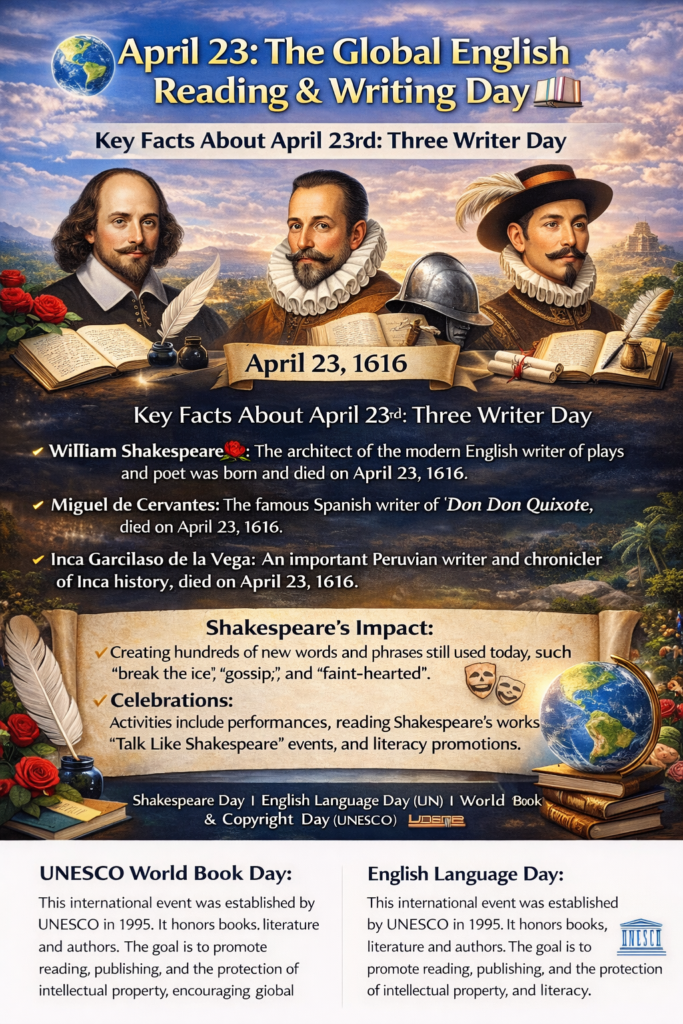
Shakespeare Day 2025 is on Wednesday, April 23rd. This day marks the traditional birthday of William Shakespeare, and also his death day. Twinkl notes that it is a day to celebrate the renowned playwright.
Elaboration:
- While the exact birth date of William Shakespeare is unknown, it is widely believed he was born on April 23, 1564, and died on the same date in 1616.
- Shakespeare’s baptism was recorded on April 26, 1564, which was common practice at the time, three days after birth.
- Shakespeare Day is celebrated annually on April 23rd.
- In 2025, April 23rd falls on a Wednesday.
- Twinkl suggests celebrating with a day off-timetable to delve into Shakespeare’s works and life.
++++++++++++
+++
Comprehensive Guide to Shakespeare Day Celebrations and First Folio Events
Shakespeare Day: April 23,
William Shakespeare’s birthday is celebrated annually on April 23rd, which coincidentally is also the date of his death in 1616. The First Folio, published in 1623, was the first collected edition of Shakespeare’s plays and remains one of the most significant publications in literary history. Below is a comprehensive list of celebrations, performances, and educational events organized by category and location.
Official Major Celebrations
Stratford-upon-Avon, UK (Shakespeare’s Birthplace)
- Shakespeare’s Birthday Celebrations Parade – (weekend following Shakespeare Day)
- Shakespeare Weekender – Free festival on Henley Street outside Shakespeare’s Birthplace with workshops, activities, and performances
- Birthday Afternoon Tea – Special event for RSC Patrons (
- Speaking Shakespeare Workshops – Free activities at the Royal Shakespeare Theatre
- Shakespeare Birthday Reception – Pre-parade gathering for RSC Friends and guests
London, UK
- Shakespeare’s Globe Theatre Special Performances – Rotating schedule of Shakespeare’s plays through April including “Cymbeline”
- Globe Theatre Guided Tours – Special birthday-themed tours
Washington DC, USA
- Folger Shakespeare Library Birthday Celebrations – Annual celebration with readings, performances, and activities focused on the First Folio
+++++++++++++++++
+++++++++++
A) Final Version (Publish-Ready)
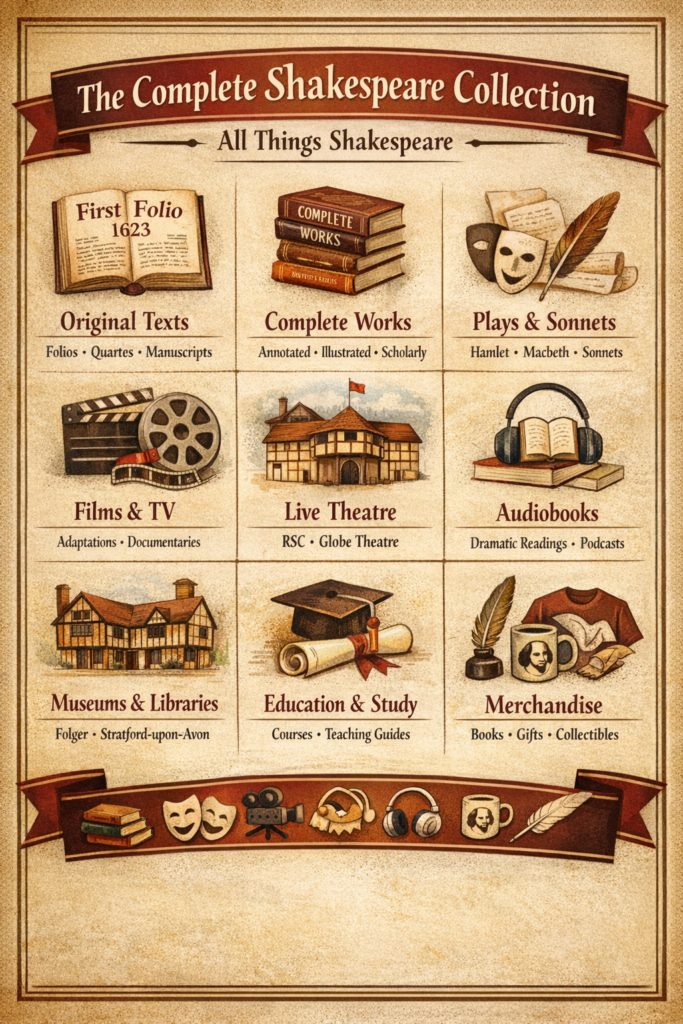
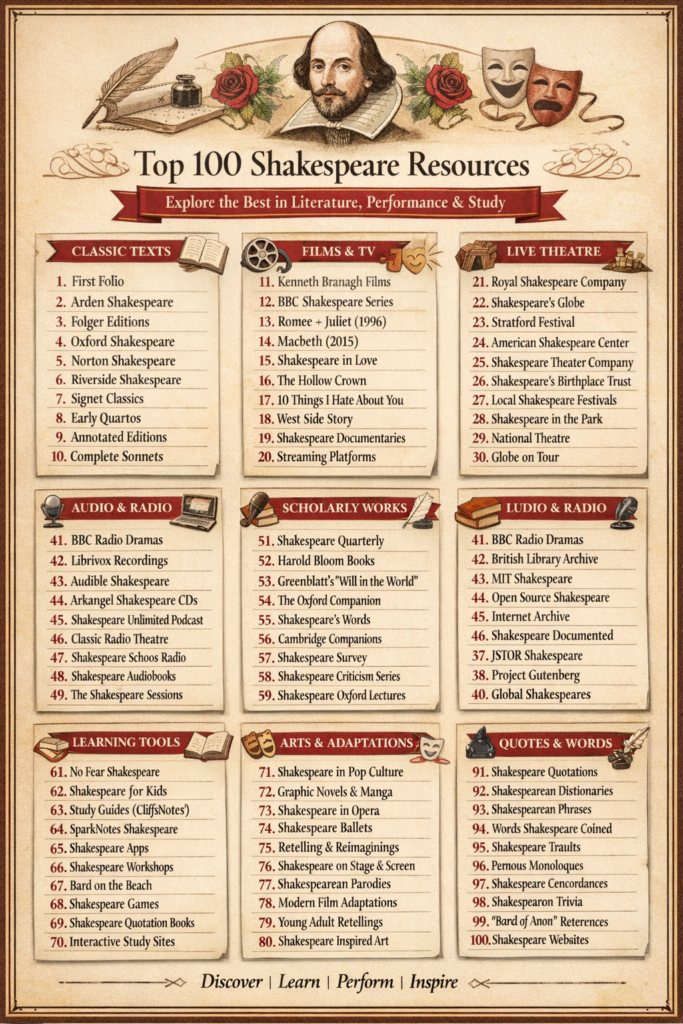
Shakespeare’s collections encompass a vast array of formats, from rare historical artifacts to modern digital adaptations, all preserving and promoting his 38 plays, 154 sonnets, and poems. These resources serve scholars, educators, enthusiasts, and casual audiences, offering endless avenues for exploration, education, and enjoyment. Below is a comprehensive overview, categorized for ease, with key examples highlighting global accessibility and cultural impact.
Below is a comprehensive, structured overview of “All Shakespeare Collections” worldwide — covering books, media, institutions, products, and services.
(Organized by category for clarity and completeness.)
🎭 ALL SHAKESPEARE COLLECTIONS
I. Primary Text Collections (Original & Early Editions)
- First Folio (1623)
- Second Folio (1632)
- Third Folio (1663–64)
- Fourth Folio (1685)
- Individual Quartos (early single-play editions)
- Facsimile Folio Editions
- Digital Folio Scans
- Early Modern Manuscripts (where available)
- Archival Library Holdings (rare book collections)
2. Complete Works Edition
- Arden Shakespeare
- Oxford Shakespeare
- Cambridge Shakespeare
- Folger Shakespeare Library Editions
- Norton Shakespeare
- Penguin Classics
- Signet Classics
3. Individual Play Editions
For each play (e.g., Hamlet, Macbeth, As You Like It, Romeo and Juliet, Othello, King Lear, Twelfth Night, etc.):
- Standalone books
- Annotated study editions
- Classroom editions
- Graphic novel adaptations
- Manga adaptations
- Illustrated children’s versions
- Simplified English adaptations
- Performance scripts
4. Poetry Collections
- Shakespeare’s Sonnets
- Narrative Poems (Venus and Adonis, The Rape of Lucrece)
- Complete Poems Editions
- Annotated Sonnets
- Themed sonnet collections (love, time, beauty)
5. Scholarly & Academic Collections
- Critical Essays
- Shakespeare Encyclopedias
- Companion Guides
- Academic Journals
- Research Databases
- Dissertations
- Performance Studies
- Shakespeare Biography Collections
- Historical Context Studies
- Linguistic Studies of Shakespearean English
6. Digital Archives & Online Collections
- Folger Shakespeare Library Digital Archive
- British Library Shakespeare Collections
- Internet Archive Shakespeare scans
- Project Gutenberg Shakespeare texts
- Open-access scholarly databases
- University Shakespeare portals
- Shakespeare performance databases
- Online concordances
- Word frequency databases
- Interactive annotated texts
7. Audiobooks & Audio Collections
- Complete Plays Audiobooks
- Individual Play Recordings
- Full-cast Dramatic Recordings
- BBC Radio Shakespeare Series
- Dramatic readings of Sonnets
- Podcast adaptations
- Audio study guides
- Shakespeare language pronunciation guides
Platforms:
- Audible
- BBC Sounds
- Spotify
- Apple Books
- Librivox (public domain recordings)
9. Film & Television Adaptations
- Classic Hollywood adaptations
- BBC Shakespeare Television Series
- Modern film adaptations (e.g., Romeo + Juliet, Hamlet, Macbeth)
- Contemporary retellings
- Animated adaptations
- Shakespeare-inspired films
- Documentary films
- Educational video lectures
- Streaming platform productions
10. Live Theatre & Performance Collections
- Royal Shakespeare Company (RSC) productions
- Shakespeare’s Globe performances
- Stratford Festival (Canada)
- Broadway productions
- West End productions
- International Shakespeare festivals
- Touring productions
- School theatre productions
- Community theatre adaptations
- Modern reinterpretations
X. Educational & Institutional Collections
- School curriculum materials
- University course syllabi
- Shakespeare summer schools
- Theatre workshops
- Actor training programs
- Shakespeare camps
- Online masterclasses
- Teaching guides
- Study kits
- Examination prep materials
11. Museums, Libraries & Archives
- Shakespeare Birthplace Trust
- Shakespeare’s Globe Museum
- Folger Shakespeare Library
- British Library Shakespeare holdings
- Stratford-upon-Avon historic sites
- Shakespeare houses and heritage sites
- Traveling exhibitions
- Rare manuscript collections
12. Language & Linguistic Resources
- Shakespeare glossaries
- Concordances
- Shakespeare dictionaries
- Phrase origin collections
- Shakespeare quotation books
- “Words coined by Shakespeare” collections
- Shakespeare vocabulary study guides
- Language modernization guides
13. Merchandise & Commercial Products
- Collector’s editions
- Art prints & posters
- Illustrated quote collections
- Shakespeare-themed clothing
- Educational games
- Board games
- Literary gifts
- Theatre memorabilia
- Replica folios
- Calligraphy prints
- Shakespeare-themed stationery
- Decorative home items
- Shakespeare-inspired perfumes, teas, themed products
14. Creative Adaptations & Inspired Works
- Novels inspired by Shakespeare
- Modern retellings
- Young adult adaptations
- Graphic novels
- Manga Shakespeare
- Musical adaptations
- Opera adaptations
- Ballet interpretations
- Contemporary reinterpretations
- Film remakes
- Stage-to-screen adaptations
15. Research & Data Collections
- Shakespeare word-frequency databases
- Stylometric studies
- Authorship attribution research
- Digital humanities projects
- Performance archives
- Comparative literature databases
🌍 Global Scope
Shakespeare collections exist in:
- Libraries
- Museums
- Universities
- Streaming platforms
- Theatre institutions
- Educational systems
- Digital archives
- Public domain repositories
- Commercial publishing houses
They serve:
- Students
- Teachers
- Scholars
- Actors
- Directors
- Researchers
- Fans
- Linguists
- Collectors
- General readers
🏛 In Summary
“All Shakespeare Collections” includes:
- Original Folios
- Complete Works editions
- Individual plays
- Poetry
- Academic research
- Digital archives
- Audiobooks
- Films
- TV
- Live theatre
- Educational systems
- Museums
- Linguistic tools
- Commercial products
- Cultural adaptations
It spans literature, language, performance, education, commerce, and global culture.
+++++
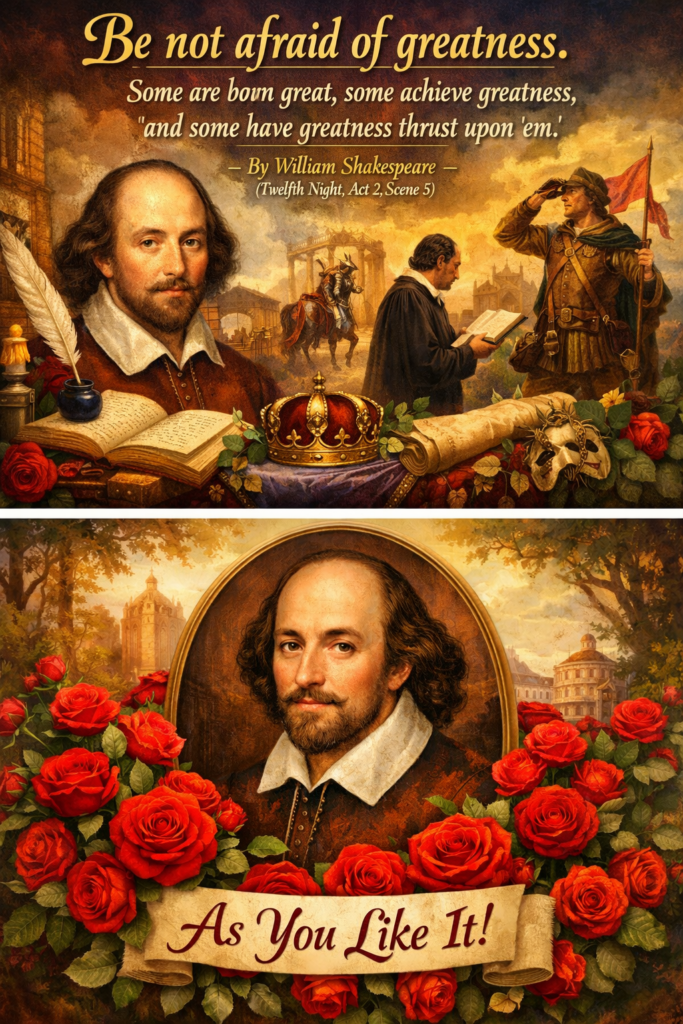
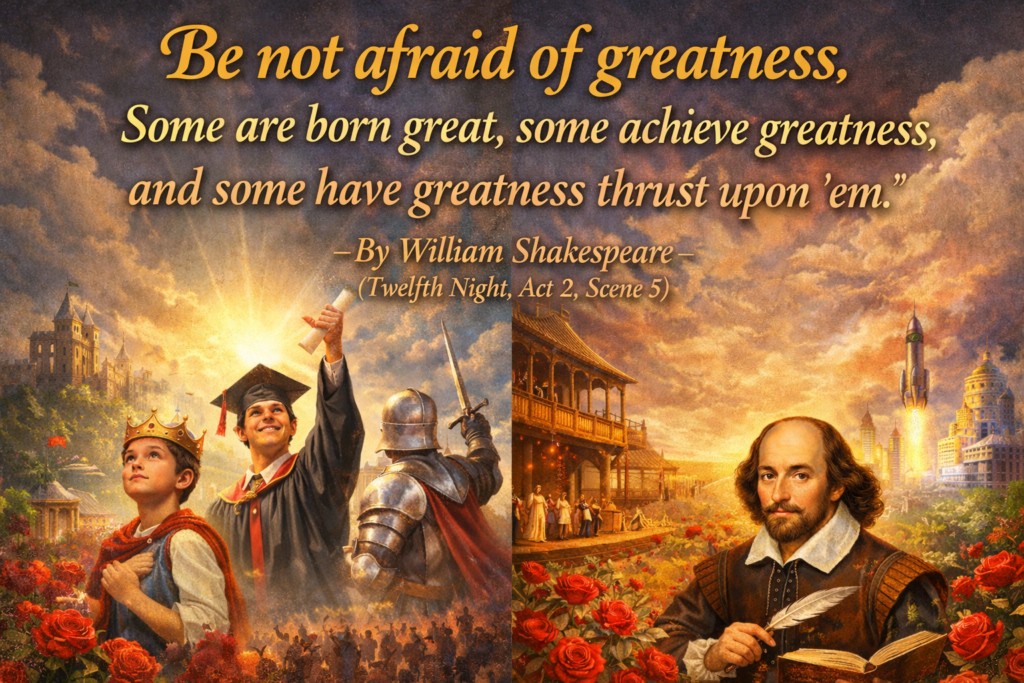
Shakespeare Collections Worldwide 🌍🎭📚
📚 The Foundational Texts
- The First Folio: The original 1623 book that collected 36 of Shakespeare’s plays; without it, half his work would be lost.
- “As You Like It”: A specific Pastoral Comedy from the First Folio, famous for the “All the world’s a stage” speech.
- Printed Books: Modern paperback and hardcover editions (e.g., Arden, Oxford) used for reading and study today.
💻 Digital & Multimedia Collections
- Websites: Digital hubs (e.g., Folger Digital Texts) offering free, searchable versions of the plays and history.
- Articles: Short academic or news pieces analyzing specific themes, characters, or historical facts.
- Movies: Feature films (e.g., Kenneth Branagh’s adaptations) that bring the stories to a mass global audience.
- Videos: Short clips, educational summaries (e.g., CrashCourse), or scene studies found on platforms like YouTube.
- Audiobooks: Full-cast audio recordings that allow listeners to hear the rhythm of the language without visual distraction.
- Television Shows: Serialized adaptations (e.g., The Hollow Crown) or modern retellings broadcast into homes.
- Radio Broadcasts: Audio plays performed on public radio (e.g., BBC Radio 3), continuing a tradition of “theater of the mind.”
- Theaters & Festivals (e.g., The Royal Shakespeare Company, Shakespeare Festivals globally)
🎭 Performance & Education🎓
- Live Theater Performances: The plays as they were meant to be experienced—acted live on stage in real-time.
- Schools (K-12): Institutions where students first encounter Shakespeare through simplified texts and introductory lessons.
- High Schools: Secondary education settings where students analyze themes and perform scenes for literature credit.
- Universities: Higher education institutions (e.g., Oxford, Harvard) conducting advanced research and criticism.
- Global Encyclopedias (especially Wikipedia): The world’s first reference point for quick facts, plot summaries, and historical context.
- University & Research Libraries (e.g., The Bodleian, The Folger Shakespeare Library)
Major physical institutions that house the world’s largest concentrations of rare Shakespearean documents and provide space for deep study. The infrastructure that ensures the next generation encounters Shakespeare.
📚 Missing Print & Textual Collections
- The Quartos (The small, individual booklets printed before the First Folio)
- Critical Editions (Scholarly versions with footnotes, e.g., The Arden Shakespeare, The Oxford Shakespeare)
- Facsimiles (Exact photographic reproductions of the 1623 original pages)
- Promptbooks (Scripts marked up by directors with stage directions)
- Concordances (A–Z indexes of every word used in the plays)
- Translations (Collections in languages other than English)
- Biographies (Historical accounts of Shakespeare’s life)
- Graphic Novels & Manga (Visual comic adaptations)
- Literary Criticism & Essays (Academic analysis collections)
🏛️ Missing Visual, Audio & Institutional Collections
- Digital Archives & Databases (Searchable academic repositories like JSTOR or EEBO)
- Podcasts (Modern audio discussions and analyses)
- Operas & Ballets (Musical adaptations, e.g., Verdi’s Otello)
- Museum Artifacts (Collections of costumes, props, and set designs)
- Festivals (Recurring events like The Oregon Shakespeare Festival)
- Paintings & Fine Art (Visual art inspired by scenes from the plays)
🎬 Category 3: Performance & Visual Media (The Plays Alive)
Shakespeare intended his work to be seen, played, and read aloud; these collections preserve the visual history.
9. Cinematic Film Adaptations: Big-screen interpretations that open up the plays to massive global audiences, such as Kenneth Branagh’s 2006 film version of As You Like It set in 19th-century Japan.
10. Recorded Live Stage Productions (e.g., National Theatre Live, Globe Player)
High-definition recordings of live theatrical performances streamed to cinemas or homes, capturing the energy of the stage production for a global audience.
11. Television Broadcasts & Series (e.g., The Hollow Crown) Serialized TV adaptations or modernized retellings that bring Shakespeare into the living room. (Primary Audience: Home Viewers & Educators)
12. Performance Archives (e.g., The Victoria & Albert Museum) Museum collections holding costumes, prompt books, set designs, and photographs from past productions of plays like As