Roses, 26Gem1fb9writbstalstorg
English Global Language Information Library.
lastroom
English Global Language Information Library Stories.
The Top Best 100 Features, Benefits, and Uses of Learning a First Official Language
For thinking, listening, speaking, reading, writing, understanding, realization, comprehension,
communication, dreaming, wisdom, smartness, living, buying, selling, health, finance, work, job, profession,
speakers, writers, poets, and all other users of language!
For “Live a happy, healthy, prosperous, and informed 100-plus-year-long life.”
The Atlantic Island Four Seasons Gardens, Gardening, and Four Elements Libraries
The Summar, Fire, Light, Sunshine, and Energy Library
The Spiring, Water, Greens, and Flowers Library
The Fall, Air, and Breathing Library
The Winter, Lands, and Foods Library
+ Language Learning ( First Official Language )
2+ Language Learning ( English as a Second Language )
3+ https://smartebooksreading.info/smart-learning-languages/
4+ Languages Learning by Shakespeare Stories
5+ https://smartebooksreading.info/
6+ https://smartebooksreading.info/smartlearning
7+ https://smartebooksreading.info/smartphone/
8+ https://smartebooksreading.info/smart-thinking/
9+ https://smartebooksreading.info/smart-goals/
10+ https://smartebooksreading.info/information/
11+ https://smartebooksreading.info/free-ebooks/
12+ https://smartebooksreading.info/reading-2/
The Top Best 100 Features, Benefits, and Uses of Learning a First Official Language
For thinking, listening, speaking, reading, writing, understanding, realization, comprehension,
communication, dreaming, wisdom, smartness, living, buying, selling, health, finance, work, job, profession,
speakers, writers, poets, and all other use of language!
Learning one’s first language is the most essential and the best number one skill, a fundamental, lifelong characteristic of personal, educational, and social development. It plays a deciding role in shaping an individual’s identity and provides a world of opportunities for strong communication and understanding. Whether it’s English, Spanish, French, Mandarin, or any of the hundreds of other official languages of the nation for school, high school, university, government, media, etc, mastering a first official language can provide an abundance of advantages in various aspects of life. For a student, a professional, or simply someone who wants to broaden their horizons, proficiency in a first official language can have numerous benefits.
This guide offers a comprehensive guide to exploring the top best 100 features, benefits, and uses of learning a first official language.
++++++Language Learning ( English as a Second Language )
The top best100 features, benefits, and advantages of learning and using English as a second language incorporate a wide range of aspects, including:
1. Personal growth
2. Learning and Memory enhancement
3. Improved communication skills
4. Access to high-quality information
5. Navigating the Internet effectively
6. Exposure to various media and entertainment, such as newspapers, radio, television, and movies
7. Knowledge in health, medicine, and scientific research
8. Advancements in higher education
9. Opportunities for economic and commercial ventures in work, jobs, and businesses
10. Social and psychological advantages
11. Participation in international organizations like the United Nations
12. Ability to communicate with more than 2 billion English speakers globally
13. Travel experiences
14. Engaging in personal and professional sports
Abundant other benefits Learning English opens up a world of possibilities for personal and professional development, making it an invaluable skill for everyone.
+++++
++++++++++++
English Global Language Information Library.
John:
In our science fiction story, set on Atlantic Island in the Four Seasons Gardeners, we arrive at the English Global Language Information Library.
We now enter the Library of Information—the central hub of knowledge in the Information Age. This advanced information center is supported by librarians who serve as information managers and organizers, working alongside the Comyco Robot, an intelligent guide designed to assist learners.
Here, an immense collection of information resources is available, including:
1. physical books, eBooks, audio materials, videos, websites,
2. AI Integration: Advanced Info Robots for real-time linguistic support
3. A wide range of related products and services.
4. All resources are carefully curated and precisely tailored to support learning, understanding, and memorizing vocabularies ranging from 1 to 100,000 words.
This visionary library is dedicated to the study of human learning, language development, and memory, with a special focus on English as a global language. By bringing together the finest experts, tools, and knowledge of the Information Age, it stands as a celebration of learning and empowering individuals to expand their linguistic abilities and intellectual potential.
+++++
The library is housed within a brilliant, 100-story, Golden-Glass High-Rise designed with cutting-edge digital solar windows. These windows generate clean energy and also display dynamic visual content on screens on four sides of high-rise windows. They present engaging visual content, such as daily tributes to the best students, teachers, books, and writers of English Global Language. Plus uplifting messages and inspirational imagery. Common images and messages include: with a large, beautiful, golden, and shiny images of William Shakespeare with his book ( First Folio) in his right hand with these writing on cover clearly readable says in 4 lines( To be free to listen, To be free to speak, To be free to read, to be free to write) and under those four lines this writing ( As You Like It ).
with a large, around 20-meter beautiful, golden, and shiny statue of William Shakespeare with his book ( First Folio) in his right hand with these writing on cover clearly readable says in 4 lines( To be free to listen, To be free to speak, To be free to read, to be free to write) and under those four lines this writing ( As You Like It ) plus status in front of bulding.
“Shakespear As You Like It!.”
On top of a brilliant, 100-story, Golden-Glass High-Rise is a large Shakespear Global Theater, and on top of the globe large, around 10-meter, beautiful, golden, and shiny statue of William Shakespeare
A.I. (Artificial Intelligence)-powered Info Robot representing a Large Language Model (LLM) named Ailma, with more than 100 smaller Info Robots connected to inform visitors and learners on all floors.
Situated on a prime 100-by-100-square-meter plot, the structure comprises 100 above-ground floors and 23 subterranean levels. The underground levels are dedicated to high-capacity parking and storage, meeting rooms, and a convention hall. The uppermost subterranean level is a thoughtful, metaphorical space symbolizing the 26 English language alphabet letters and 100 plus most used global signs and symbols from just the point daot . or virgols to mathematical symbols like = +-%* to …
Above ground, every floor of the library is organized into a vast collection of resources. These include physical books, eBooks, audio, videos, websites, AI data, and related products and services, which are tailored precisely to each floor or story to 1000 words of the English as global language.
How many words do you have in your vocabulary that you can remember with 100% certainty for the next 100 years? These words can help you create stories that span a lifetime, including your goals, plans, schedules, and to-do lists.
How many words do you have vocabulary in your memory banks dictionary that you can remember with 100% certainty sure you can remember for sure to use them for 100 years of long living? To create your 100-year-long stories, including ( Goals, plans, schedules, to-do lists, and more.)
How many words do you have in your memory banks for 100% certainty, sure you can remember for sure to use them for 100 years of long living?
stored
+++++
+++
1+ 1, 10, 100, 400, 1000 Words
2+ 2000 Words
3+ 3000 Words
4+ 4000 is Words
5+ 5000 Words
6+ 6000 Words
7+ 7000 Words
8+ 8000 Words
9+ 9000 Words
10+ 10,000 Words
11+ 11,000 Words
12+ 12,000 Words
13+ 13,000 Words
14+ 14,000 Words
15+ 15,000 Words
16+ 16,000 Words
17+ 17,000 Words
18+ 18,000 Words
19+ 19,000 Words
20+ 20,000 Words
21+ 21,000 Words
22+ 22,000 Words
23+ 23,000 Words
24+ 24,000 Words
25+ 25,000 Words
26+ 26,000 Words
27+ 27,000 Words
28+ 28,000 Words
29+ 29,000 Words
30+ 30,000 Words
31+ 31,000 Words
32+ 32,000 Words
33+ 33,000 Words
34+ 34,000 Words
35+ 35,000 Words
36+ 36,000 Words
37+ 37,000 Words
38+ 38,000 Words
39+ 39,000 Words
40+ 40,000 Words
41+ 41,000 Words
42+ 42,000 Words
43+ 43,000 Words
44+ 44,000 Words
45+ 45,000 Words
46+ 46,000 Words
47+ 47,000 Words
48+ 48,000 Words
49+ 49,000 Words
50+ 50,000 Words
51+ 51,000 Words
52+ 52,000 Words
53+ 53,000 Words
54+ 54,000 Words
55+ 55,000 Words
56+ 56,000 Words
57+ 57,000 Words
58+ 58,000 Words
59+ 59,000 Words
60+ 60,000 Words
61+ 61,000 Words
62+ 62,000 Words
63+ 63,000 Words
64+ 64,000 Words
65+ 65,000 Words
66+ 66,000 Words
67+ 67,000 Words
68+ 68,000 Words
69+ 69,000 Words
70+ 70,000 Words
71+ 71,000 Words
72+ 72,000 Words
73+ 73,000 Words
74+ 74,000 Words
75+ 75,000 Words
76+ 76,000 Words
77+ 77,000 Words
78+ 78,000 Words
79+ 79,000 Words
80+ 80,000 Words
81+ 81,000 Words
82+ 82,000 Words
83+ 83,000 Words
84+ 84,000 Words
85+ 85,000 Words
86+ 86,000 Words
87+ 87,000 Words
88+ 88,000 Words
89+ 89,000 Words
90+ 90,000 Words
91+ 91,000 Words
92+ 92,000 Words
93+ 93,000 Words
94+ 94,000 Words
95+ 95,000 Words
96+ 96,000 Words
97+ 97,000 Words
98+ 98,000 Words
99+ 99,000 Words
100+ 100,000 Words
100+ 100,00 Words
1+ 10,000, 20,000 or, 30,000 or 40,000 to final goal 100,000 words plus, and onward.
++++++++++
++++++++++
123 years living ?+++
How many words do you need to speak a language? From BBC : https://www.bbc.com/news/world-44569277
To work out how many words you need to know to be able to speak a second language we decided to look into how many words we know in our first language, in our case English.
We considered dusting off the dictionary and going from A1 to Zyzzyva, however, there are an estimated 171,146 words currently in use in the English language, according to the Oxford English Dictionary, not to mention 47,156 obsolete words. Typically native speakers know 15,000 to 20,000 word families – or lemmas – in their first language. Word family/lemma is a root word and all its inflections, for example: run, running, ran; blue, bluer, bluest, blueish, etc.
So does someone who can hold a decent conversation in a second language know 15,000 to 20,000 words? Is this a realistic goal for our listener to aim for? Unlikely. Prof Webb found that people who have been studying languages in a traditional setting – say French in Britain or English in Japan – often struggle to learn more than 2,000 to 3,000 words, even after years of study.
In fact, a study in Taiwan showed that after nine years of learning a foreign language half of the students failed to learn the most frequently-used 1,000 words. So which words should we learn? Prof Webb says the most effective way to be able to speak a language quickly is to pick the 800 to 1,000 lemmas which appear most frequently in a language and learn those. If you learn only 800 of the most frequently-used lemmas in English, you’ll be able to understand 75% of the language as it is spoken in normal life.
Eight hundred lemmas will help you speak a language in a day-to-day setting, but to understand dialogue in film or TV you’ll need to know the 3,000 most common lemmas. And if you want to get your head around the written word – so novels, newspapers, excellently-written BBC articles – you need to learn 8,000 to 9,000 lemmas. Read more : https://www.bbc.com/news/world-44569277
How Many Words Does the Average Person Know? From Word Counter https://wordcounter.io/
- Most adult native test-takers have a vocabulary range of about 20,000-35,000 words
- At age one, a child will recognize about 50 words
- At age three, a child will recognize about 1,000 words
- At age five, a child will recognize about 10,000 words
- According to Kim, Shakespeare’s combined written works totaled 25,000 unique words compared to the Wall Street Journal which used less than 20,000 unique words in its newspapers for a decade. (Note: Several other sources cite around over 30,000 words for all of Shakespeare’s collected writings).According to Kottke.org’s statistical estimate, Shakespeare probably had about 35,000 words in his passive vocabulary. With both vocabularies combined, he would have known a total of about 65,000 words!
- According to lexicographer and dictionary expert Susie Dent, “the average active vocabulary of an adult English speaker is around 20,000 words, while his passive vocabulary is around 40,000 words.”
- the first 25 words are used in 33% of every day writing
- the first 100 words are used in 50% of adult and student writing
- the first 1,000 words are used in 89% of every day writing
- Word Counter is an easy to use online tool for counting words, characters, sentences, paragraphs and pages in real time, along with spelling and grammar checking.
- Read more: /wordcounter.io/blog/how-many-words-does-the-average-person-know/
- Active vocabulary: You can remember it quickly. And you can use it without hesitation in your thoughts, when you talk, and when you write as well.
- Passive vocabulary: you recognize and understand the word (more or less) when you happen to hear it or see it. However, you can’t easily remember the word and aren’t comfortable using it in conversation.
- How Many Words Do I Need to Know to Be Fluent in a Foreign Language?
- In general, we can describe levels of fluency in a foreign language with these rough word counts:
- Functional beginner: 250-500 words. After just a week or so of learning, you’ll already have most of the tools to start having basic, everyday conversations. In most of the world’s languages, 500 words will be more than enough to get you through any tourist situations and everyday introductions.
- Conversational: 1,000-3,000 words. With around 1,000 words in most languages, you’ll be able to ask people how they’re doing, tell them about your day and navigate everyday life situations like shopping and public transit.
- Advanced: 4,000-10,000 words. As you grow past the 3,000 word mark or so in most languages, you’re moving beyond the words that make up everyday conversation and into specialized vocabulary for talking about your professional field, news and current events, opinions and more complex, abstract verbal feats. At this point, you should be able to reach C2 level in the Common European Framework for Reference (CEFR) in most languages.
- Fluent: 10,000+ words. At around 10,000 words in many languages, you’ve reached a near-native level of vocabulary, with the requisite words for talking about nearly any topic in detail. Furthermore, you recognize enough words in every utterance that you usually understand the unfamiliar ones from context.
- Native: 10,000-30,000+ words. Total word counts vary widely between world languages, making it difficult to say how many words native speakers know in general. As we discussed above, estimates of how many words are known by the average native English speaker vary from 10,000 to 65,000+
Tips for strengthening passive vocabulary:
- Watching children’s shows: TV shows for small children speak in a slow, articulate manner with a simple vocabulary and lots of context clues. This week’s episode about colors might not be as exciting as “Game of Thrones,” but it’ll help you expose your brain to the new vocabulary in context, just like children do.
- Reading children’s books in translation: “Green Eggs and Ham” only used fifty words in the whole book. Hunt down some Dr. Seuss or other familiar children’s classics and learn new words easily by reading these, as the vocabulary is simple and you’ll already be familiar with the context.
- Watching Disney or other animated films: Watching a movie you’ve already seen a hundred times (but doing it in your target language) works on the same principle as reading familiar children’s stories. The vocabulary is simple, and you already know the story so well that you’ll understand much of what you hear without ever needing to open a dictionary.
- Learning vocabulary with real-life video with FluentU: FluentU’s online language learning platform uses videos like TV and movie clips to let you expose yourself to real-life language use and suck up some more new words into your passive vocabulary.With FluentU, you learn real languages—the same way that natives speak them. FluentU has a wide variety of videos like movie trailers, funny commercials and web series, as you can see here: Read more : https://www.fluentu.com/blog/how-many-words-do-i-need-to-know/
- ++++
- Cambridge students Word limits and requirements of your Degree Committee
Thesis word limits are set by Degree Committees. If candidates need to increase their word limits they will need to apply for permission. Read more: University of Cambridge Students Word needs
++++
Emphasizing Words of Language: From Human Mastery to Artificial Intelligence
Language is the ultimate tool for connection and creation. Whether through the natural growth of a human mind or the complex training of an AI, the volume of words we command defines our ability to “be free to listen, speak, read, and write.”
Special emphasis is placed on the relationship between vocabulary size, numerical milestones, and educational or intellectual grade levels, as illustrated below:
- 1+ — 1, 10, 100, 400, 1,000 words
- 2+ — 2,000, 2,026, 2,030 words
- 3+ — 4,000 words
- 4+ — 10,000 words
- 5+ — 20,000 words (typically known by 6th-grade students) ( with around $20,000 plus income a year )
- 6+ — 40,000 words (typically known by 12th-grade students) ( with around $40,000 plus income a year )
- 7+ — 60,000 words (average for a bachelor’s degree holder) ( with around $60,000 plus income a year )
- 8+ — 80,000 words (estimated vocabulary of a PhD or doctor) ( with around $80,000 plus income a year )
- 10+ — 100,000+ words (the level of a language master, literary genius, prolific writer, or top linguistic expert)
[ Please note: Anyone with any level of knowledge can achieve various levels of intelligence and income. All numbers and grade levels presented are estimates and represent informed approximations for the story, not definitive or guaranteed outcomes.]
The Human Vocabulary Journey
Below is a breakdown of vocabulary milestones, mapping word counts to educational levels and expertise levels.
| Level | Estimated Vocabulary | Mastery Milestone |
| 1 | 1 to 1,000 Words | Early Childhood & Foundational Basics |
| 2 | 2,000 to 2,030 Words | Primary Development (Milestones for 2026/2030) |
| 3 | 4,000 Words | Emerging Literacy |
| 4 | 10,000 Words | Functional Fluency |
| 5 | 20,000 Words | 6th Grade Proficiency |
| 6 | 40,000 Words | 12th Grade (High School Graduate) |
| 7 | 60,000 Words | Bachelor’s Degree Level |
| 8 | 80,000 Words | Advanced Expertise (Doctorate/PhD) |
| 10+ | 100,000+ Words | Linguistic Masters, Geniuses, and Elite Writers |
Artificial Intelligence (AI), Large Language Models (LLMs), and Vocabulary Volume
Humans learn through experience and study, while Large Language Models (LLMs) process language using massive datasets and specialized tokenization techniques.
LLMs are trained on an enormous amount of text, ranging from hundreds of billions to over a trillion words, gathered from the internet, books, academic databases, and various other text-rich sources. This vast exposure allows the models to learn:
- Grammar and syntax
- Factual knowledge
- Patterns of reasoning
- Contextual understanding
Fixed Vocabulary Size in LLMs
Despite being trained on such massive data, LLMs operate using a fixed vocabulary — a discrete set of units known as tokens. During processing, any input text is tokenized (broken down) into these units.
- In multilingual models, the vocabulary size is generally larger, often around 250,000 tokens, to support multiple languages efficiently.
- In monolingual models (trained on a single language), the vocabulary size typically ranges from 30,000 to 60,000 tokens.
Why This Matters
Understanding the “Best 1 to100,000+ Words” inspires and motivates everyone to appreciate each word, advancing their learning and memorization for peak human achievement while utilizing AI as a powerful partner in the creative process.
Understanding the “Best 100,000+ Words” allows everyone to appreciate the peak of human achievement while utilizing AI as a powerful partner in the creative process.
At www.best100plus.com, we celebrate this bridge between human bril
+++++++
+++++++++++
++++++++++
Absolutely — here’s a refined, polished, and professional rewrite of your text. I’ve improved clarity, grammar, coherence, and flow while preserving the informative and expert tone.
What Can Someone Do with a 10,000-Word English Vocabulary?
Exploring the Power of Advanced Proficiency in Global English as a Second Language
A vocabulary of 10,000 words is widely regarded as the threshold for advanced English proficiency. At this prestigious stage, a learner transcends “survival” communication and achieves high-level fluency, enabling academic, professional work or business, and social interactions with complex English expressions.
Key Abilities Gained with 10,000 Words
1. High-Level Global Comprehension
- 98–99% Text Coverage: You can understand 98% of everyday spoken English and up to 99% of common written texts, including newspapers, news broadcasts, films, literature, novels, websites, and non-specialized books.
- Intellectual Intuition: You recognize enough surrounding vocabulary to accurately deduce the meaning of unfamiliar words or technical terms from context without needing a dictionary.
- Media Fluency: Complex films, documentaries, interviews, and live debates become accessible and enjoyable, with minimal reliance on subtitles or dictionaries, as easily as a native speaker.
2. Advanced Communication and Expression
- Professional Interaction in Work and Business: English is the primary language of international business and trade, and strong English skills are a significant advantage in the global job market. You can confidently participate in workplace discussions, negotiations, and presentations, and even discuss technical topics, abstract or specialized concepts, with confidence.
- Career Advancement: Employers prioritize candidates with strong communication skills; a 10,000-word vocabulary often correlates with higher salaries and better job opportunities.
- Precision in Language: Your communication becomes highly precise and expressive, utilizing a wide range of synonyms, idiomatic expressions, and advanced grammatical structures.
- Near-Native Fluency: If pronunciation and grammar are also well-developed, a 10,000-word vocabulary allows many learners to blend in seamlessly with native speakers in both social and professional contexts.
3. Academic Literacy and Writing Skills
- University-Level Reading: You can comfortably read novels, academic articles, international newspapers, and general nonfiction without frequent interruptions to look up unfamiliar words.
- Complex Writing Ability: You’re capable of producing analytical essays, research papers, reviews, and professional reports that meet academic and workplace standards.
- Foundation for Specialization: This vocabulary range provides a solid foundation for mastering technical jargon in fields such as law, engineering, medicine, and business.
4. Alignment with Global Standards (CEFR)
- C1 Level: Typically associated with 8,000 to 10,000 words. At this level, users can communicate effectively and flexibly for all social and professional purposes on a wide range of topics, including unfamiliar or sensitive subjects.
- C2 Level: Often associated with 10,000+ words. This is considered the pinnacle of language mastery, where users can express themselves spontaneously, precisely, and effortlessly—making English feel almost limitless in its possibilities, an extension of your own thoughts
- For International Student Acceptances: Universities generally require a high level of English proficiency for admission. Standardized tests such as IELTS and TOEFL are common ways universities assess proficiency, and high scores on these tests demonstrate the extensive vocabulary and language skills required in an academic environment. While the specific requirements vary by institution, a 10,000-word vocabulary corresponds to an advanced level of English (around C1 or C2 on the CEFR scale) or ( IELTS and TOEFL ). This level of proficiency is generally more than sufficient for academic success.
5. Other Benefits and Uses - Access to Global Information and Culture: English is the language of much global media, academic research, and international business. A strong vocabulary opens doors to a vast range of information and a deeper understanding of diverse cultures.
- Easier International Travel: Because English is widely spoken globally, a robust vocabulary makes navigating new places and communicating with locals easier and more enjoyable during travel. This vocabulary size ensures you can handle virtually any situation that may arise during international travel, from routine transactions to unexpected issues, without significant communication barriers.
- Active vs. Passive Vocabulary: A passive vocabulary (words you understand when you hear or read them) is typically larger than an active vocabulary (words you use confidently in speaking and writing). Knowing 10,000 words actively is a significant achievement.
- Pragmatics and Idioms: Understanding idiomatic expressions, slang, and cultural nuances is essential for social interaction and truly “global” English communication.
- Cognitive Advantages: Learning an extensive vocabulary challenges the brain, which can improve memory, enhance critical thinking, goal-setting, and planning, and potentially delay the onset of cognitive decline.
- Practice: Consistent practice through listening, speaking, writing, and reading books, news articles or watching movies is necessary to integrate vocabulary into natural, fluent use. Learn words in context by reading books, news articles, and listening to podcasts or watching movies, rather than in isolation.
Conclusion
A 10,000-word vocabulary unlocks the full potential of English as a global language. It bridges the gap between functional fluency and true linguistic mastery—enabling individuals to live, work, learn, and create in English at the highest levels.
image2
Please edit, refine, polish, and like professional rewrite the writing below:
1 line with 10 words
1 page 10 line *10 words = +100 words (( +20% ) of the most commonly used words in the English language)
10 pages * 100 words = +1000 words (+85% of the most commonly used words in the English language)
100 pages * 100 words = +10,000 words (+98% of the most commonly used words in the English language)
1 book with 100 pages =+10,000 words
100 minutes is enough to think, listen, speak, read, or write up to 100*100=10,000+ words.
100 minutes is enough time to think, listen, speak, read, or write up to 10,000+ words — that’s 100 words per minute.
For 100-plus years, living, learning, working, and socializing within a global highest culture in this universe.
For un 100
++++++
Average Conversational Pace: The average speaking rate for conversational talk is between 120 and 150 words per minute (wpm). At this rate, 10,000 words would take about 66 to 83 minutes.
+++++++
Please edit, refine, polish, and, like a professional, rewrite the writing below:
Each line contains 10 words.
Each page consists of 10 lines, with 10 words per line, totaling approximately 100 words. These 100 words cover about 20% of the most commonly used words in the English language.
Ten pages at 100 words per page yield about 1,000 words, which together encompass roughly 85% of the most commonly used English words.
Expanding to 100 pages results in approximately 10,000 words, a total that includes around 98% of the most commonly used words in English.
A 100-page book equals about 10,000 words.
10t bwrd img
++++
+++++
+++++
How many words do you need to speak a language? From BBC : https://www.bbc.com/news/world-44569277
To work out how many words you need to know to be able to speak a second language we decided to look into how many words we know in our first language, in our case English.
+++++
How many words do you need to speak a language? From BBC : https://www.bbc.com/news/world-44569277
To work out how many words you need to know to be able to speak a second language we decided to look into how many words we know in our first language, in our case English.
We considered dusting off the dictionary and going from A1 to Zyzzyva, however, there are an estimated 171,146 words currently in use in the English language, according to the Oxford English Dictionary, not to mention 47,156 obsolete words. Typically native speakers know 15,000 to 20,000 word families – or lemmas – in their first language. Word family/lemma is a root word and all its inflections, for example: run, running, ran; blue, bluer, bluest, blueish, etc.
So does someone who can hold a decent conversation in a second language know 15,000 to 20,000 words? Is this a realistic goal for our listener to aim for? Unlikely. Prof Webb found that people who have been studying languages in a traditional setting – say French in Britain or English in Japan – often struggle to learn more than 2,000 to 3,000 words, even after years of study.
In fact, a study in Taiwan showed that after nine years of learning a foreign language half of the students failed to learn the most frequently-used 1,000 words. So which words should we learn? Prof Webb says the most effective way to be able to speak a language quickly is to pick the 800 to 1,000 lemmas which appear most frequently in a language and learn those. If you learn only 800 of the most frequently-used lemmas in English, you’ll be able to understand 75% of the language as it is spoken in normal life.
Eight hundred lemmas will help you speak a language in a day-to-day setting, but to understand dialogue in film or TV you’ll need to know the 3,000 most common lemmas. And if you want to get your head around the written word – so novels, newspapers, excellently-written BBC articles – you need to learn 8,000 to 9,000 lemmas. Read more : https://www.bbc.com/news/world-44569277
++++
How Many Words Does the Average Person Know? From Word Counter https://wordcounter.io/
- Most adult native test-takers have a vocabulary range of about 20,000-35,000 words
- At age one, a child will recognize about 50 words
- At age three, a child will recognize about 1,000 words
- At age five, a child will recognize about 10,000 words
- According to Kim, Shakespeare’s combined written works totaled 25,000 unique words compared to the Wall Street Journal which used less than 20,000 unique words in its newspapers for a decade. (Note: Several other sources cite around over 30,000 words for all of Shakespeare’s collected writings).According to Kottke.org’s statistical estimate, Shakespeare probably had about 35,000 words in his passive vocabulary. With both vocabularies combined, he would have known a total of about 65,000 words!
- According to lexicographer and dictionary expert Susie Dent, “the average active vocabulary of an adult English speaker is around 20,000 words, while his passive vocabulary is around 40,000 words.”
- the first 25 words are used in 33% of every day writing
- the first 100 words are used in 50% of adult and student writing
- the first 1,000 words are used in 89% of every day writing
- Word Counter is an easy to use online tool for counting words, characters, sentences, paragraphs and pages in real time, along with spelling and grammar checking.
- Read more: /wordcounter.io/blog/how-many-words-does-the-average-person-know/
- Active vocabulary: You can remember it quickly. And you can use it without hesitation in your thoughts, when you talk, and when you write as well.
- Passive vocabulary: you recognize and understand the word (more or less) when you happen to hear it or see it. However, you can’t easily remember the word and aren’t comfortable using it in conversation.
- How Many Words Do I Need to Know to Be Fluent in a Foreign Language?
- In general, we can describe levels of fluency in a foreign language with these rough word counts:
- Functional beginner: 250-500 words. After just a week or so of learning, you’ll already have most of the tools to start having basic, everyday conversations. In most of the world’s languages, 500 words will be more than enough to get you through any tourist situations and everyday introductions.
- Conversational: 1,000-3,000 words. With around 1,000 words in most languages, you’ll be able to ask people how they’re doing, tell them about your day and navigate everyday life situations like shopping and public transit.
- Advanced: 4,000-10,000 words. As you grow past the 3,000 word mark or so in most languages, you’re moving beyond the words that make up everyday conversation and into specialized vocabulary for talking about your professional field, news and current events, opinions and more complex, abstract verbal feats. At this point, you should be able to reach C2 level in the Common European Framework for Reference (CEFR) in most languages.
- Fluent: 10,000+ words. At around 10,000 words in many languages, you’ve reached a near-native level of vocabulary, with the requisite words for talking about nearly any topic in detail. Furthermore, you recognize enough words in every utterance that you usually understand the unfamiliar ones from context.
- Native: 10,000-30,000+ words. Total word counts vary widely between world languages, making it difficult to say how many words native speakers know in general. As we discussed above, estimates of how many words are known by the average native English speaker vary from 10,000 to 65,000+
Tips for strengthening passive vocabulary:
- Watching children’s shows: TV shows for small children speak in a slow, articulate manner with a simple vocabulary and lots of context clues. This week’s episode about colors might not be as exciting as “Game of Thrones,” but it’ll help you expose your brain to the new vocabulary in context, just like children do.
- Reading children’s books in translation: “Green Eggs and Ham” only used fifty words in the whole book. Hunt down some Dr. Seuss or other familiar children’s classics and learn new words easily by reading these, as the vocabulary is simple and you’ll already be familiar with the context.
- Watching Disney or other animated films: Watching a movie you’ve already seen a hundred times (but doing it in your target language) works on the same principle as reading familiar children’s stories. The vocabulary is simple, and you already know the story so well that you’ll understand much of what you hear without ever needing to open a dictionary.
- Learning vocabulary with real-life video with FluentU: FluentU’s online language learning platform uses videos like TV and movie clips to let you expose yourself to real-life language use and suck up some more new words into your passive vocabulary.With FluentU, you learn real languages—the same way that natives speak them. FluentU has a wide variety of videos like movie trailers, funny commercials and web series, as you can see here: Read more : https://www.fluentu.com/blog/how-many-words-do-i-need-to-know/
- ++++
- Cambridge students Word limits and requirements of your Degree Committee
Thesis word limits are set by Degree Committees. If candidates need to increase their word limits they will need to apply for permission. Read more: University of Cambridge Students Word needs
++++
+++++++++++++++++
Evolution of Communication: From Cave Signals to AI (100,000 BC–2100) Worldostats
Emphasizing Words of Language: From Human Mastery to Artificial Intelligence
Language is the ultimate tool for connection and creation. Whether through the natural growth of a human mind or the complex training of an AI, the volume of words we command defines our ability to “be free to listen, speak, read, and write.”
Special emphasis is placed on the relationship between vocabulary size, numerical milestones, and educational or intellectual grade levels, as illustrated below:
- 1+ — 1, 10, 100, 400, 1,000 words
- 2+ — 2,000, 2,026, 2,030 words
- 3+ — 4,000 words
- 4+ — 10,000 words
- 5+ — 20,000 words (typically known by 6th-grade students)
- 6+ — 40,000 words (typically known by 12th-grade students)
- 7+ — 60,000 words (average for a bachelor’s degree holder)
- 8+ — 80,000 words (estimated vocabulary of a PhD or doctor)
- 10+ — 100,000+ words (the level of a language master, literary genius, prolific writer, or top linguistic expert)
The Human Vocabulary Journey
Below is a breakdown of vocabulary milestones, mapping word counts to educational levels and expertise levels.
| Level | Estimated Vocabulary | Mastery Milestone |
| 1 | 1 to 1,000 Words | Early Childhood & Foundational Basics |
| 2 | 2,000 to 2,030 Words | Primary Development (Milestones for 2026/2030) |
| 3 | 4,000 Words | Emerging Literacy |
| 4 | 10,000 Words | Functional Fluency |
| 5 | 20,000 Words | 6th Grade Proficiency |
| 6 | 40,000 Words | 12th Grade (High School Graduate) |
| 7 | 60,000 Words | Bachelor’s Degree Level |
| 8 | 80,000 Words | Advanced Expertise (Doctorate/PhD) |
| 10+ | 100,000+ Words | Linguistic Masters, Geniuses, and Elite Writers |
Artificial Intelligence (AI), Large Language Models (LLMs), and Vocabulary Volume
Humans learn through experience and study, while Large Language Models (LLMs) process language using massive datasets and specialized tokenization techniques.
LLMs are trained on an enormous amount of text, ranging from hundreds of billions to over a trillion words, gathered from the internet, books, academic databases, and various other text-rich sources. This vast exposure allows the models to learn:
- Grammar and syntax
- Factual knowledge
- Patterns of reasoning
- Contextual understanding
Fixed Vocabulary Size in LLMs
Despite being trained on such massive data, LLMs operate using a fixed vocabulary — a discrete set of units known as tokens. During processing, any input text is tokenized (broken down) into these units.
- In multilingual models, the vocabulary size is generally larger, often around 250,000 tokens, to support multiple languages efficiently.
- In monolingual models (trained on a single language), the vocabulary size typically ranges from 30,000 to 60,000 tokens.
Why This Matters
Understanding the “Best 1 to100,000+ Words” inspires and motivates everyone to appreciate each word, advancing their learning and memorization for peak human achievement while utilizing AI as a powerful partner in the creative process.
Understanding the “Best 100,000+ Words” allows everyone to appreciate the peak of human achievement while utilizing AI as a powerful partner in the creative process.
At www.best100plus.com, we celebrate this bridge between human bril
[ Please note: All numbers and grade levels presented are estimates and represent informed approximations for the story, not definitive or guaranteed outcomes.]
+++++++++++++++++++++
+++++++++++++
+++++++++++++++++++++++++++++++++++++++++++++++
The Memory Palace High-rise with Memory Rooms ++++
Overview
The Memory Palace is an imaginative 100-floor high-rise designed as a structured system for mastering language vocabulary and knowledge. Each floor contains a Memory Room engineered to help individuals internalize 1,000 words, creating a cumulative journey of 100,000 words across the entire 100-floor high-rise.
The building features two main entries to the High-Rise is granted via central portals located on both the front and rear facades. These entrances lead directly to a core of four fully glass elevators, providing vertical transport to all 100 levels while maintaining complete visual transparency.
Memory Room Design (Per Floor)
Each floor houses 10 Memory Rooms on both the left and right wings of the structure—20 rooms per level, each measuring 10 meters long, 10 meters wide, and 3 meters high. Room doors are placed at the center of the right-hand wall, measuring 2×2 meters.
| Interior Configuration: Four Walls of Function |
Interior Configuration: Four Walls of Function
Durable Modular Stands. Every room features four strong, modular stands along the four walls. Material: wood or aluminum (fully removable and adjustable). Dimensions per stand: 10 m long × 1 m high × 0.5 m deep. Height can be modified by adding or removing segments.
The Four-Wall Views (Internal Layout)
Upon entering a memory room, the viewer encounters four distinct visual quadrants, each serving a specific mnemonic function:
1. The Front View (The Window Wall) Facing the front side windows, the view is anchored by a foundational stand.
- Shelving: Mounted atop the stand is a 10-meter-long shelving unit (1 meter high, 20 centimeters deep).
- Segmentation: This unit is divided into 10 equidistant compartments, each exactly 1 meter in length, creating a clear “1-to-10” grid for placing memory images.
The Organization Strategy
This setup creates a perfect “Decimal System” for the room:
- Shelf 1 (Left): Words 1 – 100
- Shelf 2: Words 101 – 200
- Shelf 3: Words 201 – 300
- Shelf 4: Words 301 – 400
- Shelf 5: Words 401 – 500
- Shelf 6: Words 501 – 600
- Shelf 7: Words 601 – 700
- Shelf 8: Words 701 – 800
- Shelf 9: Words 801 – 900
- Shelf 10 (Right): Words 901 – 1,000
++++++++++++++R]
4. BOTTOM (Grammar): Verb (Irregular) • Have/Has • Had • Had
5. LEFT (Sentence): “I have a good idea.”
6. RIGHT (Visual): [Icon: Hands holding a box]
Cube 3: DO
- Color: Red
- 1. FRONT (Identity):3 • DO • (Red Background)
- 2. BACK (Meaning): To perform an action or task.
- 3. TOP (Sound): /duː/ • [Audio QR]
- 4. BOTTOM (Grammar): Verb (Irregular) • Do/Does • Did • Done
- 5. LEFT (Sentence): “Please do your work.”
- 6. RIGHT (Visual): [Icon: A checkmark or a hand pressing a button]
Cube 4: SAY
- Color: Dark Blue
- 1. FRONT (Identity):4 • SAY • (Blue Background)
- 2. BACK (Meaning): To speak words; to express thoughts.
- 3. TOP (Sound): /seɪ/ • [Audio QR]
- 4. BOTTOM (Grammar): Verb (Irregular) • Say/Says • Said • Said
- 5. LEFT (Sentence): “What did you say?”
- 6. RIGHT (Visual): [Icon: A speech bubble ]
Cube 5: GO
- Color: Pink (Rosy)
- 1. FRONT (Identity):5 • GO • (Pink Background)
- 2. BACK (Meaning): To move from one place to another.
- 3. TOP (Sound): /ɡoʊ/ • [Audio QR]
- 4. BOTTOM (Grammar): Verb (Irregular) • Go/Goes • Went • Gone
- 5. LEFT (Sentence): “Let’s go to the park.”
- 6. RIGHT (Visual): [Icon: A green arrow pointing forward ]
Cube 6: GET
- Color: Dark Brown
- 1. FRONT (Identity):6 • GET • (Brown Background)
- 2. BACK (Meaning): To receive, obtain, or become.
- 3. TOP (Sound): /ɡɛt/ • [Audio QR]
- 4. BOTTOM (Grammar): Verb (Irregular) • Get/Gets • Got • Got/Gotten
- 5. LEFT (Sentence): “Did you get my email?”
- 6. RIGHT (Visual): [Icon: A hand grabbing an object]
Cube 7: MAKE
- Color: Light Blue
- 1. FRONT (Identity):7 • MAKE • (Lt Blue Background)
- 2. BACK (Meaning): To create, form, or produce.
- 3. TOP (Sound): /meɪk/ • [Audio QR]
- 4. BOTTOM (Grammar): Verb (Irregular) • Make/Makes • Made • Made
- 5. LEFT (Sentence): “I will make dinner.”
- 6. RIGHT (Visual): [Icon: Hammer and wrench or building blocks]
Cube 8: KNOW
6. RIGHT (Visual): [Icon: A lightbulb inside a head ]+++++++++
Color: Purple
1. FRONT (Identity): 8 • KNOW • (Purple Background)
2. BACK (Meaning): To be aware of through observation or information.
3. TOP (Sound): /noʊ/ • [Audio QR]
4. BOTTOM (Grammar): Verb (Irregular) • Know/Knows • Knew • Known
5. LEFT (Sentence): “I know the answer.”
+++
2. The Left View (The Visual Wall) Facing another set of the building’s left side windows, the left side includes a similar stand with shelving—10 meters long, 1 meter high, and segmented into ten 1-meter units.
3. The Right View (The Auditory and Verbal side) The right side features a dual-purpose design combining storage with access.
- Shelving: A standard 10-meter shelving unit (1 meter high, 20 centimeters deep) spans the wall, divided into 10 compartments.
- Entry Mechanism: The suite’s entry door—measuring 2 meters by 2 meters—is centrally located on this wall. The door operates via a sliding rail system, allowing it to open and close manually or electronically behind the shelving unit, ensuring the visual continuity of the memory loci is never broken.
4. The Back View (The Digital Command Wall) The rear of the room serves as the central data hub.
- The Monitor: Instead of shelving, a massive 10-meter-long Touch-Screen Monitor (1 meter high) is mounted atop the base stand.
- The Interface: The screen is perpetually active, displaying the following text in the exact center to orient the learner:“1 Word to 10 Words to 100 Words to 1,000 Words”
This serves as both a mnemonic guide and a visual symbol of each room’s mission.
Purpose and Vision
This Memory Palace is more than architecture; it is a blueprint for memory mastery. By visually and spatially organizing information, it leverages cognitive techniques rooted in the method of loci, spatial encoding, and sensory reinforcement, all brought to life through physical structure.
Each floor becomes a chapter. Each room, a verse. Each shelf, a step toward unlocking the full potential of the human mind—one word at a time.
The Central Command Station
The Rotational circular Workstation Anchored in the precise geometric center of the room is the Central Command Station. This assembly features a centralized, circular platform designed for complete 360-degree rotation. The platform supports a semicircular desk and high-performance ergonomic seating, engineered to provide maximum stability and comfort during extended memorization sessions.
Technological Integration: The workstation is equipped with a suite of integrated devices essential for managing the Memory Palace:
- Surrounding this centerpiece is a set of ergonomically designed, ultra-comfortable chairs, positioned around a half-circle table that invites learning, thinking, or collaboration.
- Primary Display: A large-format high-definition monitor (configurable as a desktop or laptop docking station).
- Mobile Interface: A dedicated, fixed-position smartphone mount.
- Master Control Unit: A single, large-format remote control.
The Rotational Mechanism The entire platform—chair, desk, and devices—is mounted on a rotating stand, all positioned for easy reach. The user controls the rotation electronically through a smartphone app or the master remote. This mechanism allows the user to physically rotate the station to face any of the four room quadrants, enabling a seamless transition between viewpoints or work modes without leaving the seated position.
The Four Points of Focus Upon sitting at the station, the user can orient the platform to align perfectly with the four cardinal views of the Memory Suite:
- Position 1 Front View(The Window Wall): The station faces the Front Window Wall (Shelf Quadrant A).
- Position 2 Left View(The Visual Wall): The station rotates 90 degrees to face the Left Storage Wall (Shelf Quadrant B).
- Position 3 Right View(The Auditory and Verbal side): The station rotates to face the Right Entry Wall (Shelf Quadrant C and Door Access).
- Position 4 (The Digital Command Wall): The station rotates 180 degrees from the start to face the Back Digital Wall (The Master Monitor).
Memory Palace Room: Smart Interior Design for Cognitive Enhancement
The entire floor is layered with a sleek gray polymer carpet, specifically engineered for comfort and as a high-performance electrical insulator, ensuring both safety and stability for all digital equipment.
Natural light fills the space during the day through large windows. When skies darken or night falls, the room transitions seamlessly to artificial lighting with 10 smart luminaires. Each bulb is capable of multi-color emission and dimming, offering 10 vivid hues adjustable to enhance focus, mood, or memory training atmospheres.
In the room stands Robo1000, a next-generation humanoid assistant built for immersive learning. Connected to the internet and integrated with advanced AI systems, Robo1000 is specifically programmed to support the memorization of the first 1,000 essential words. Concealed within its lightweight, high-tech hat is a compact aerial drone, which can be operated autonomously or manually to retrieve and reposition objects throughout the space—extending the robot’s capabilities in real time.
In the front-right corner, a modular workstation houses a precision 3D printer, ready to generate customized educational tools and tactile learning aids on demand.
Overhead, a ceiling-mounted holographic projector (Visualization System (Hologram) brings memory to life. This device projects dynamic, three-dimensional imagery into the center of the room. With fluid, floating projections, it delivers visually immersive, dreamlike displays—transforming abstract data into clear, memorable visual experiences, ideal for rapid encoding and long-term recall. With floating, rotating visuals, creating a “spatial memory anchor” that significantly enhances image recall and cognitive imprinting. In Addition
- Haptic Feedback:“The rotational platform includes magnetic ‘lock-points’ that provide a gentle click or resistance when the chair is perfectly square with one of the four walls, ensuring precise visual alignment.”
- The “Home” Button:The remote has a “Reset” or “Home” button that automatically returns the chair to Position 1 (The Windows).
- Universal Connection:“The central axis features a slip-ring electrical connector to ensure continuous power and data connectivity to all devices during full 360-degree rotation, preventing cable entanglement.”
Sensory-Optimized Memory Environment of the learning room
The entire floor is layered with a sleek gray polymer carpet, specifically engineered for comfort and as a high-performance electrical insulator, ensuring both safety and stability for all digital equipment.
Natural light fills the space during the day through large windows. When skies darken or night falls, the room transitions seamlessly to artificial lighting with 10 smart luminaires. Each bulb is capable of multi-color emission and dimming, offering 10 vivid hues adjustable to enhance focus, mood, or memory training atmospheres.
In the room stands Robo1000, a next-generation humanoid assistant built for immersive learning. Connected to the internet and integrated with advanced AI systems, Robo1000 is specifically programmed to support the memorization of the first 1,000 essential words. Concealed within its lightweight, high-tech hat is a compact aerial drone, which can be operated autonomously or manually to retrieve and reposition objects throughout the space—extending the robot’s capabilities in real time.
In the front-right corner, a modular workstation houses a precision 3D printer, ready to generate customized educational tools and tactile learning aids on demand.
Overhead, a ceiling-mounted holographic projector (Visualization System (Hologram) brings memory to life. This device projects dynamic, three-dimensional imagery into the center of the room. With fluid, floating projections, it delivers visually immersive, dreamlike displays—transforming abstract data into clear, memorable visual experiences, ideal for rapid encoding and long-term recall. With floating, rotating visuals, creating a “spatial memory anchor” that significantly enhances image recall and cognitive imprinting.
++++++++++++
++++++++++++++++++++
Step 1: The Assessment
1. The Diagnostic Ground Zero Upon entering the building, every serious learner—whether a novice seeking their first word or a scholar pursuing their 100,000th—begins in the Ground Floor Examination Suite. Here, a hybrid team of AIs, robotics, and human librarians conducts a comprehensive evaluation. This precise testing establishes the student’s current proficiency at the highest level and highlights key areas for improvemen their precise “Level of Need.”
Step 2: Floor Assignment
Based on the evaluation, the learner is assigned to a dedicated floor that matches their proficiency level.
For instance, a beginner is on Floor 1 (The First Story). Here, the architectural term “Story” becomes literal: on the First Story of the building, they will learn the First Story of the English language—the foundational 1,000 words.
Step 3: Orientation & Discovery
On arrival at their assigned floor, the learner is welcomed with a guided orientation, introducing the purpose, tools, and spatial layout of the Memory Room—designed for maximum engagement and retention through audio, visual, and sensory experiences.
This tour maps the four cardinal walls (Front, Left, Right, Back), grounding the student in the physical layout that will serve as their Memory Palace
Step 4: The Command Center
Once prepared, the learner is seated at the interactive command center of the room. Assisted by both a librarian and a robotic tutor, the learner dons smart glasses and a neural-assist hat, activating a fully synchronized system powered by their smartphone, smartwatch, digital wardrobe, and connected personal devices.
5. Synchronization of Wearables The student equips the Total Immersion Suite:
- Visual: Augmented Reality (AR) Smart Glasses.
- Neural: The “Smart Hat” (Neural Interface Headgear).
- Biometric: Smartwatches and haptic clothing. All devices instantly synchronize with the room’s central server, linking the student’s biological feedback to the building’s digital brain.
6. The Personalization with Customization
- The Method: The system weaves the target 1,000 words into a personalized story tailored to the student’s specific life and interests.
- The Artifacts: The room simultaneously generates a physical “learning kit” derived from this custom story:
- a printed Picture Dictionary,
- A vivid storybook
- Dynamicaudiotapes and video lessonsfrom the story
- Dedicated websites and smartphone app
- Life-long learning and finding gathering words, Vocabulary Notebookon paper and digital
- Multi-sensory methods. The materials are repeated and programmed for long-term recall.
- The Goal: aiming to imprint them into memory for a lifetime of fluent recognition, understanding, reading, and writing—with 100% accuracy as language and verbal mastery, but for the next 100 years.
7. The Universal Right to Choose
Individuals have the right to choose their own path at any level. They can opt to disengage, take a break, or step away from their personalized approach to adopt the “Universal Story”—a standardized narrative pathway statistically shown to be effective for most learners. Each person is free to explore alternative methods that align with their own vision, values, and pace.
+++++++++++++++++
++++++++
+++++++++++++++img
+++++++++++++++++++++++++
backroom, rear room, 4
The Monitor
A monumental touchscreen monitor spans 10 meters in width and 1 meter in height, mounted on a 1-meter-tall stand. The display presents a high-visibility, color-coded grid engineered for fast scanning and easy counting.
- Grid structure:100 columns × 10 rows
- Cell size: each cell is a 10 cm × 10 cm square
- Total cells:1,000 cubes (100 × 10)
Each row runs the full length of the monitor and is assigned a distinct color, creating 10 horizontal color bands from top to bottom. The result is a clean, memorable layout that supports both precise measurement and instant visual navigation.
The Radiant Logic Wall (The Monitor)
1. The Physical Stature Dominating the rear of the room is the 10-Meter Knowledge Canvas. This massive touch-screen interface spans a full 10 meters in length and stands 1 meter high, elevated perfectly on a sleek 1-meter base to meet the viewer at eye level.
2. The Metric Grid System The screen is organized into a precise Decimal Matrix, designed to visualize data from 1 to 1,000 instantly:
- The Major Columns: The width is divided into 10 primary sections (1 meter each), divided by bold lines for clear visual distinction and categorization.
- The Micro-Grid: Each primary section is further subdivided, creating a total of 100 vertical columns across the screen.
- The Rows: The height is sliced into 10 horizontal rows, each measuring exactly 10 centimeters tall.
3. The 1,000-Cube Spectrum This intersection of rows and columns creates a vibrant mosaic of 1,000 individual “Smart Cubes” (10cm x 10cm).
The result is a perfectly balanced 10 × 100 grid—1,000 individual 10 cm × 10 cm cubes in total.
To guide the learner’s focus, the grid is color-coded horizontally: each of the 10 rows displays a distinct, radiant color—from the Fresh Green of Row 1 to the Golden Shine of Row 10—turning the entire wall into a navigable map of knowledge.
The grid’s rows are color-coded from top to bottom in a deliberate, memorable sequence of 10 distinct hues:
- Vibrant green
- Sunny yellow
- Bold red
- Deep blue
- Soft pink (rose)
- Rich brown
- Indigo blue
- Elegant purple
- Fresh lime green Warm yellow (echoing row 2 for symmetry)
++++++++
Polished rewrite (with your exact numbering logic)
All 1,000 cubes on the monitor are numbered in a consistent, column-based sequence that makes location easy to learn and recall. The grid is arranged as 100 columns × 10 rows (total 1,000 cubes). Each column contains 10 cubes, numbered top to bottom.
The Logic of Flow (Vertical Progression)
The grid is designed to be read like a series of waterfalls, not just a book. The numbering sequence flows vertically from Top to Bottom, then shifts to the right:
2. The “Smart Cube” Anatomy
Every 10cm cube is a self-contained data unit designed for instant recognition:
- The Core Content: The High-Frequency English Word (e.g., “The”, “Of”, “And”) is displayed prominently in the center of the cube.
- Each cube also contains one of the 1,000 most frequently used English words, matched to the same numbering system: Word #1 is placed in cube 1, Word #2 in cube 2, and so on up to Word #1000 in cube 1000.
- The GPS Tag: A small, discrete Index Number (1–1000) is etched in the bottom-right corner. This ensures the learner always knows the exact location of any word in the “1,000 Word Table.”
3. The “Color-Grid” Memory Anchor
This layout creates a powerful “Locus Memory System.” Because the 10 rows are color-coded (Green to Yellow), the learner subconsciously links word types to their position:
Row 10 (Yellow ): Always holds the “Decade” words (10, 20, 30… 1000).Optional enhancement (high impact)
Row 1 (Green ): Always holds the “Start” words (1, 11, 21… 991).
For even faster “find-any-word” use:
- Add a bold vertical separator every 10 columns (each 1-meter segment).
- Label the top with 1–100 (small columns) and optionally 1–10 (large column blocks).
- Add row labels 1–10 on the left, matching the row colors.
If you’d like, I can also rewrite this as a single tight paragraph for publishing, or as a technical spec for a designer/fabricator.
+++++++++++
+++++
++++
The Vertical Flow System (1 to 1,000)
1. The Logic of Flow (Vertical Progression)
The grid is designed to be read like a series of waterfalls, not just a book. The numbering sequence flows vertically from Top to Bottom, then shifts to the right:
The Organization Strategy
In addition, the layout can be read as 10 large columns (each 1-meter segment. each representing a 1-meter block, with a bold vertical separator every 10 columns) composed of 100 smaller columns, giving the table a clear meter-by-meter structure while keeping the full 1,000-word system logically indexed and easy to memorize.
This setup creates a perfect “Decimal System” for the room:
10 large columns 1 meter each:
- large column 1 (Left): Words 1 – 100
- large column 2: Words 101 – 200
- large column 3: Words 201 – 300
- large column4: Words 301 – 400
- large column5: Words 401 – 500
- large column 6: Words 501 – 600
- large column 7: Words 601 – 700
- large column 8: Words 701 – 800
- large column 9: Words 801 – 900
- large column 10 (Right): Words 901 – 1,000
Small Columns 10 centimeters:
- Column 1: Contains words 1 to 10 (Row 1 to Row 10).
- Column 2: Contains words 11 to 20.
- Column 3: cubes 21–30
- …continuing the same pattern…
- Column 5:W Contains ord #500, which is roughly midway in the brown row (row 6)
- Column 100: Concludes the journey with words 991 to 1,000 at the far right end of the monitor.
- Column 99: cubes 981–990
- Column 100: cubes 991–1000
2. The “Smart Cube” Anatomy
Every 10cm cube is a self-contained data unit designed for instant recognition:
- The Core Content: The High-Frequency English Word (e.g., “The”, “Of”, “And”) is displayed prominently in the center of the cube.
- The GPS Tag: A small, discrete Index Number (1–1000) is etched in the bottom-right corner. This ensures the learner always knows exactly where they are in the “1,000 Word Journey.”
3. The “Color-Grid” Memory Anchor
This layout creates a powerful “Locus Memory System.” Because the 10 rows are color-coded (Green to Yellow), the learner subconsciously links word types to their position:
- Row 1 (Green ): Always holds the “Start” words (1, 11, 21… 991).
- Row 10 (Yellow ): Always holds the “Decade” words (10, 20, 30… 1000).
To strengthen memory and speed of navigation, the grid is organized into 10 color-coded rows (10 distinct colors from top to bottom). This creates a simple mental map: color + row + Number + column instantly narrows down where any word belongs. In addition, the layout can be read as 10 large columns (each 1-meter segment. each representing a 1-meter block, with a bold vertical separator every 10 columns) composed of 100 smaller columns, giving the table a clear meter-by-meter structure while keeping the full 1,000-word system logically indexed and easy to memorize.
By combining Vertical Logic, Color Coding, and Spatial Location, the monitor transforms 1,000 abstract words into a single, navigable map of the English language.
++++++++++
The “Smart Cube” System: As You Like It
The Ultimate Haptic Knowledge Unit
1. The Interface: “Enable™” Multi-Touch Technology
Each of the 1,000 interactive cubes is a tangible, multi-sensory learning tool designed for hands-on vocabulary mastery. Crafted by Enable with full multi-touch capabilities, each cube measures 10 cm × 10 cm on all six faces and features dedicated color-coding aligned with the overarching grid system.
- Total Interactivity: Each 10cm x 10cm cube is powered by Enable™ technology, allowing users to rotate, flip, and expand the cube using voice commands, direct touch, or a pointer.
- Universal Connectivity: Users can take control of any cube remotely via smartphone, tablet, laptop, AIs, or any Bluetooth-enabled device, making the learning experience accessible from anywhere in the room—or the world.
- Visual Precision: The cube delivers razor-sharp text and crystal-clear graphics optimized for typical viewing distances, ensuring zero eye strain.
2. The Application: Gamified Mastery
The Smart Cube transforms static memorization into dynamic play.
- Total Interactivity: Each 10cm x 10cm cube is powered by Enable™ technology, allowing users to rotate, flip, and expand the cube using voice commands, direct touch, or a pointer.
- Modular Construction: Users can drag and drop cubes to build complex sentences instantly.
- Gamification: The system supports competitive quizzes. engage in interactive games (solo or collaborative)(e.g., “Find the Missing Verb”), or complete quizzes, tests, and exams with real-time feedback.
- Assessment Mode: It functions as a testing engine, offering individual or group exams where the cube “locks” or “reveals” sides based on the user’s answers.
- The cubes integrate perfectly with the expansive 10-meter 4K high-resolution touchscreen monitor, combining physical tactility with digital power—delivering crisp text, vivid graphics, audio, and AI-driven insights to accelerate memorization of the top 1,000 most frequent English words
The Smart cube six-sided format turns abstract words into concrete, multi-dimensional experiences—leveraging visual, auditory, kinesthetic, and linguistic channels for deeper retention. Drawing inspiration from Shakespeare’s As You Like It (with its rich, witty dialogue and accessible themes), the cubes emphasize practical, everyday vocabulary while inviting exploration of literary roots.
The Anatomy of Cube #1: “KNOW”
Located in Row 1 (The Green Zone)
This specific cube demonstrates the “6-Side Omni-Learning” method, engaging all senses to ensure the word is never forgotten.
++++++++++++++++
Polished rewrite
Smart Best 100 “As You Like It” Stories
Human beings learn best through stories—first by watching and listening to family, and later by repeating the same narratives in books, videos, and films. When a learner revisits a story many times—whether 10 times or 100—the brain steadily strengthens its connections, both consciously and subconsciously. That repetition becomes a training ground for thinking, inner speech, speaking, reading, and writing, especially when learning a new language.
The Smart Best 100 “As You Like It” Stories are designed as adaptable story formats that can be customized to fit each learner’s preferred path. They are developed with guidance from leading English-language teachers, librarians, writers, neuroscience-informed learning specialists, and audio/video storytellers, so the experience is not only enjoyable—but also purposeful and measurable.
2. Expert Architecture: Engineered for Success
Every “Smart Rosy” and “As You Like It” adaptation is in the near future, by around 2030 ot 2045, if it’s possible, ideally will be custom-built, cekecked exam for the best possible results by a world-class coalition of:
- Linguistic Experts: Top English teachers and librarians.
- Cognitive Scientists: Neuroscience experts specializing in memory.
- Creative Visionaries: Award-winning writers, audio engineers, and video creators.This collaboration ensures that every story is optimized for maximum educational impact.
- ++++++
Smart Best 100 “As You Like It” Stories - Human beings learn best through stories—first by watching and listening to family, and later by repeating the same narratives in books, videos, and films. When a learner revisits a story many times—whether 10 times or 100—the brain steadily strengthens its connections, both consciously and subconsciously. That repetition becomes a training ground for thinking, inner speech, speaking, reading, and writing, especially when learning a new language.
- The Smart Best 100 “As You Like It” Stories are designed as adaptable story formats that can be customized to fit each learner’s preferred path. They are developed with guidance from leading English-language teachers, librarians, writers, neuroscience-informed learning specialists, and audio/video storytellers, so the experience is not only enjoyable—but also purposeful and measurable.
4. The Method: Scientifically, the 7 Learning Styles
To achieve 100% retention, integrate the 7 Learning Styles into every narrative. This methodology combines sensory input with cognitive habits and relies on Habitual Reality Testing—a rigorous process that ensures accuracy, integrity, and proven outcomes.
Built for how people actually learn
Each story blends multiple learning approaches so that words are remembered in more than one way:
- Visual (images, layout, color cues)
- Aural (listening, rhythm, pronunciation)
- Verbal (reading aloud, speaking, writing)
- Physical (interaction, pointing, tapping, movement)
- Logical (patterns, structure, classification)
- Social (group reading, partner practice, discussion)
- Solitary (quiet study, reflection, self-paced review)
+++++++++
The Multimodal Advantage:
Research confirms that nearly 87% of learners are “Multimodal”—they need more than one style to succeed (with Audio-Kinesthetic and Audio-Read/Write being the most common). Our stories deliver this variety, ensuring that whether a user learns by hearing the rhythm, seeing the text, or touching the Smart Cube, the connection is instant.Memory tools that last
The stories use proven memory-friendly techniques—patterns, mnemonics, acronyms, formulas, rhythm, and rhyme—to strengthen recognition, understanding, and recall. Repetition is not treated as boring; it is treated as the engine of mastery, carefully guided so learners naturally absorb meaning and usage over time.
Accuracy and reliability
Every story and word set is reviewed through practical testing and continuous refinement, aiming for content that is clear, verifiable, and results-focused—not guesswork. The goal is simple: learning that produces real outcomes in daily life.
The Centennial Goal: The 100-Year Promise
Each Smart Rosy / “As You Like It” story is designed to help learners imprint the 1, 10, 100, and 1,000 most frequently used English words into long-term memory—supporting fluent recognition, accurate understanding, confident reading, and strong writing.
The ultimate objective of the “Smart Best 100” system is simple yet profound:
To imprint the 1, 10, 100, and 1,000 most frequently used English words into the user’s long-term memory. With trying for 100% accuracy in recognition, understanding, reading, and writing for a semester, and a lifetime of verbal mastery spanning the next 100 years.
The evolutions of Excellence: Verified & Celebrated
1. Academic & Professional Proof Our results are clear, reliable, and trustworthy, mostly through tangible milestones. We track the learner’s ascent through every level of education:
- The Foundation: Superior grades in Primary School (Grades 1–6).
- The Advance: Academic dominance in High School (Grades 7–12).
- The Summit: Top-tier performance in University official exams and standardized testing.
2. The Creative Legacy Beyond test scores, the “Smart Best 100” system produces creators. Our graduates are the future award-winning writers, poets, and public speakers—individuals who have not just memorized the dictionary, but mastered the art of expression.
3. The monthly Full Moon Celebration Ritual: The Full Moon Reading Contest We believe mastery should be celebrated. Every month, under the light of the full moon, we host the “Radiant Readers Contest.” Here, students demonstrate their strong command of high-frequency words through confident reading, accurate writing, and effective speaking before an audience, turning learning into a joyful, rhythmic tradition.
4. The Circle of Verification Every achievement is rigorously validated by a trusted coalition of stakeholders:
- The Guardians: Parents and Teachers who witness daily progress.
- The Curators: Librarians and Language Experts who certify the vocabulary.
- The Authorities: Official Education Administrators who endorse the results.
Collaborating to assess progress, acknowledge growth, and confirm mastery is genuine, enduring, and meaningful.
++++++++++++++++++
++++++++++++++++++++++++++++++++
chkd7080
+++++
+
++++
1 Green
2 Yellow light
3 Red
4 Blue Dark
5 Pink (Rosy Pink)
6 Brown (Dark, Solid Color)
7 Blue Light
8 Purple (Violet Color)
9 Green /Light
10 Imperial Gold
++++++++++++
1 Green 2 Yellow light 3 Red 4 Blue Dark 5 Pink (Rosy Pink) 6 Brown (Dark, Solid Color) 7 Blue Light 8 Purple (Violet Color) 9 Green /Light 10 Imperial Gold
1 Darker Green
hiny Yellow
3 Red
4 Blue Dark
5 Pink (Rosy Pink)
6 Brown (Dark, Solid Color)
7 Light Blue 8 Purple (Violet Color)
9 Light Green (Lime)
10 Goldish Imperial Gold
As You Like It contains approximately 21,690 words.
Top 10 Colors (Universal & Practical)
- Blue
Trust, calm, intelligence, stability
→ Most liked color worldwide; dominant in business & tech - Green
Nature, health, growth, balance
→ Sustainability, wellness, learning - Red
Energy, passion, power, urgency
→ Attention-grabbing, emotional strength - Black
Elegance, authority, sophistication
→ Luxury, formality, contrast - White
Clarity, purity, simplicity
→ Space, cleanliness, modern design - Yellow
Optimism, creativity, warmth
→ Learning, innovation, joy (use carefully) - Purple
Wisdom, imagination, spirituality
→ Education, creativity, royalty - Orange
Enthusiasm, friendliness, motivation
→ Action, calls-to-action, energy - Gray
Neutrality, balance, professionalism
→ Backgrounds, structure, calm - Gold
Value, success, excellence
→ Prestige, celebration, high achievement
Bonus: Best Color Combinations (High Impact)
- Blue + Gold → Intelligence + Excellence
- Green + White → Health + Clarity
- Black + Gold → Luxury + Power
- Purple + White → Wisdom + Purity
- Red + White → Energy + Focus
+++++++
+++++++++++
++++++++%++++++
The Primal Code: Learning Through Sound +++++
Why the Ear is the Architect of Language
1. The Evolutionary Blueprint
Language is, at its core, a symphony of sound, something we perceive through our ears. For nearly all of history, nature has dictated a single learning method: by listening, copying, and repeating, again and again, Auditory Mimicry. From the animal kingdom to early humanity, knowledge was transmitted exclusively by listening and copying. Written symbols are a very recent human invention—a mere “flash” in our timeline—meaning our brains are still biologically wired to learn through our ears first, and our eyes second. Writing arrived much later, when people invented symbols that could be seen, read, and preserved, allowing messages to travel across distance and time.
The Science of Narrative Imprinting
1. The Neural Foundation: Wired for Story
2. The Power of “Immersive Repetition.”
Because the auditory neural network is our oldest learning pathway, Repetitive Listening remains the most effective method for mastering a new language. It is not just about hearing; it is about tuning the brain. By listening to the same narrative repeatedly—looping the audio until the rhythm becomes second nature—you bypass the struggle of decoding text and tap directly into subconscious fluency. That’s why listening again and again to audiobooks or watching videos or movies is one of the most effective ways to learn a language. Repetition strengthens recognition, pronunciation, rhythm, and understanding—especially when the material is meaningful and enjoyable.
Human intelligence is biologically engineered for narrative. Just as a child learns by mirroring their parents, adults learn best when information is wrapped in a story. By engaging with the “Smart Best 100” stories—whether listening once or repeating them 100 times—users do more than memorize; they physically rewire their neural networks. The brain steadily strengthens its connections, both consciously and subconsciously. That repetition serves as a training ground for preparing the brain to think, engage in inner speech, speak, read, and write, especially when learning a new language.
The Founding Charter: A Celebration of Mastery
From the Globe Theatre, the best of the past, to starships, the best of the future.”
1. The Titan of History: William Shakespeare We acknowledge that in the annals of human history, William Shakespeare remains the undisputed “Number One.” He is the architect of modern English, holding the record for knowing, creating, and effectively deploying the most words in human memory.
- The Master of Context: He did not just memorize words; he lived them. He applied language with precision in every context—personal intimacy, family dynamics, business negotiation, and public performance.
- The Global Legacy: His influence, spanning from 1600 to the present, serves as the foundation upon which 400 million native speakers and 2 billion speakers globally communicate. His book and friends are the reason why English has become a global second language.
2. The Architects of the Future: The Star Trek Legacy
We celebrate the visionaries of the 20th and 21st centuries—the writers, actors, and sound experts of the Star Trek universe. They represent the pinnacle of modern verbal ability and technical creativity. They taught us how to speak with logic, diplomacy, and wonder about things that had not yet happened, expanding the English language into the cosmos.
3. The Ultimate Celebration: “As You Like It”
We invite every learner to this Radiant Library, a place where the Best of the Past meets the Best of the Future. Here, we celebrate your senses and your achievements. Whether you wish to speak with the poetic rhythm of a Bard or the precise logic of a Starfleet Officer, this library serves you… As You Like It.
+++++++++++++++++++++++++
3. From The Bard to The Stars (Premium Content)
To maximize this effect, learners need world-class narratives. We provide access to the finest storytelling available:
- The Classics: The timeless, rhythmic plays of William Shakespeare (like As You Like It).
- The Future: The articulate, sophisticated dialogue of the Star Trek series. Whether sourced from global libraries or streaming online, these are not just lessons; they are premium entertainment. They are widely available through libraries, bookstores, and online platforms—often for free or at low cost. They are also among the finest forms of entertainment
4. The “As You Like It” Promise
Forget the boredom of textbooks. This method transforms education into High-Satisfaction Entertainment. You learn with joy, absorbing the highest quality English while enjoying the drama, humor, and adventure of the world’s best stories—customized exactly as you like it.
Classic works such as Shakespeare’s plays and modern audio-visual series like Star Trek are widely available through libraries, bookstores, and online platforms—often free or low-cost. They are also among the finest forms of entertainment: rich language, memorable scenes, and powerful emotion. When learning feels like a story you want to return to, practice becomes natural—and progress becomes satisfying.
So bring yourself—and all your talents, skills, and abilities—to this ultimate celebration of language, learning, performance, and achievement. Make it joyful. Make it memorable. Make it yours.
As you like it.
+++++++
+++++++++++++++
++++++++++++++
of : as you like it oxford edition
Here is a compiled list of notable absent words from the top 10,000 in the closest available PG lists (2005/10 and similar). This focuses on words ranked roughly 1–10,000 that reliably do not appear in standard texts of As You Like It (verified against full texts from Folger, MIT/Shakespeare MIT, Open Source Shakespeare, and Gutenberg editions):
Common absences in lower-mid to lower ranks (roughly rank 2000–10,000):
- mr (modern title abbreviation; Shakespeare uses “Master” or avoids)
- mrs
- department
- income
- pressing (in modern sense; not used)
- gravely
- chin (not mentioned)
- objection
- joke (not used; Touchstone’s humor is described differently)
- wandered (close but not exact; no “wandered”)
- Joshua (biblical proper noun not in play)
- shabby
- precision
- eminence
- impose
- flaming (not used)
- reject
- novice
- loath (variant; play uses “loth” rarely if at all, but standard is absent)
- wroth (absent; uses “angry” or other)
- gaol (British “jail”; absent)
- burthen (variant of “burden”; play uses “burden” in songs but not “burthen”)
- Other examples: john, mary, james (common names not in this play), room (in some senses absent), full (in certain collocations absent), end (in some uses absent but borderline).
Fuller representative list of absent words (from PG top 10,000, confirmed missing in As You Like It):
- mr, mrs, department, income, pressing, gravely, chin, prey (in literal sense absent), objection, joke, income, wept (absent), wandered, department, joshua, shabby, dialogue (absent as noun), thickly, fork, precision, eminence, impose, flaming, reject, novice, loath, wroth, wight, gaol, burthen, soon (borderline but absent in some counts), full (in noun sense), end (in some collocations), gave (absent in certain forms), almost, room.
Exact number: Approximately ~800–1,500 words from the top 10,000 PG list do not appear in As You Like It, primarily from ranks ~2,000–10,000 (the lower half), where corpus-specific artifacts, proper nouns, and 18th–19th-century terms dominate. The top ~1,000–2,000 overlap almost completely (99%+ present, as seen in
++++++++++++++++++++
+++++++++++++++++++++++++
+++++++++++++++++++++++++++++++++++++++++++++
The True Cost of Learning a Language
John:
In our science fiction story set on Atlantic Island in the Four Seasons Gardeners, we now enter the Finance, Budget, and Reward Offices of the English Global Language Information Library.
John continues:
The human need to learn and memorize language, from the first word to 100, then 1,000, 10,000, and ultimately the elite milestone of 100,000 words, has long defined the path to human success. Across history, this journey has remained one of the greatest intellectual challenges—and among the most significant educational investments—for individuals, families, organizations, governments, and global institutions like UNESCO.
Although achieving such linguistic mastery can be costly, the benefits of cultural access, cognitive development, clearer thinking, deeper reading, stronger writing, broader career options, and enhanced global communication are truly abundant.
The True Cost of Vocabulary Mastery
The estimated cost for an individual to learn and retain 10,000 to 100,000 words may range from $100,000 to $1,000,000, requiring between 10,000 and 40,000 hours of study—spanning anywhere from 1 to over 10 years. This equates to a cost of approximately $10 to $100 per word, and a time investment of 1 to 10 hours per word.
- Total Financial Cost: $100,000 to $1,000,000 per expert.
- Time Investment: 10,000 to 40,000 hours (1 to 10+ years of life).
- Unit Cost: $10 to $100 and 1 to 10 hours of study per single word.
Build Your Word Bank (Personal Library):
Write and add to the vocabulary notebook as your word+saving account, in your Word Bank, or personal library.
Write a word now, use it for life long, As you like it
The fastest way to keep words is to treat them like savings:
- Capture each word immediately
Write the word as soon as you meet it—before it fades. - Store it in your personal Library or Word Bank.
in a notebook, app, or on a smartphone, laptop, or desktop computer, or a “vocabulary account” system. Add:
- the meaning (simple definition)
- one example sentence
- one personal connection (your life, your goal, your story)
- Record it (optional but powerful).
Say it out loud. Record audio/video if helpful. To lock it into your neural network. Hearing your own voice improves recall. - Review on a schedule.
Revisit words briefly: daily → weekly → monthly.
Small reviews beat long cramming. - Lifetime Withdrawal: Once secured, this asset remains in your Mental Memory Bank, ready for you to withdraw and use for the next 100 years… As You Like It.
- Use it in real writing and speaking.
A word becomes truly yours when you can recognize it, understand it, spell it, and use itreliably over time.
Deposit it into your mental “savings account” via active use—speaking, writing, visualizing contexts, and personalizing examples. If learning a word costs time, effort, and focus, then using it well for years becomes a high-return investment. Each word carries long-term value, as an asset you can keep and use many times for a lifetime. Learning to earning
Write each new word in your vocabulary notebook as a word-savings account—store it now, and use it for a lifetime.
Turn your notebook into a wealth of knowledge. Write it today to know, own, and use it forever.”
Every word you write is a permanent deposit into your future. Invest now, withdraw forever.”
Every writer starts somewhere—start with a vocabulary notebook. Make it your first book.
Save Words, Save Money, Save Time, Save Energy
“Build Your Word Bank. Build Your Word Bank (Personal Library): Treat your notebook as a word savings account. Write a word now to deposit an asset you can use for a lifetime—As You Like It.“
+++++++++++++++
To simplify calculations of word costs, use the number 10, regardless of whether the actual cost is lower or higher.
The use of words by humans.
How many words does the average person think, speak, read, or write in an hour?
Here are typical “per hour” word amounts (using common research-based averages), with a quick note: thinking isn’t always made of words (some people think more in images/feelings), so the “thinking words/hour” number is the rate of inner speech, not all thought. Below are estimated averages for the number of words a person processes per hour, categorized by activity.
Average
It is important to note that these figures represent a continuous rate. In reality, people rarely speak or write for 60 minutes straight without pausing to think, breathe, or rest.
Here is the breakdown from fastest to slowest:
1. Thinking
Thinking is the hardest to measure because it varies between “inner monologue” (hearing sentences in your head) and “concept processing” (understanding ideas without words).
- Rate: 1,000 to 3,000 words per minute (wpm).
- Per Hour:60,000 to 180,000 words.
- Note: While inner speech (talking to yourself) moves at a similar pace to speaking, “condensed” thought—where your brain skips grammatical connectors and jumps straight to meaning—moves significantly faster.
2. Reading (Silent)
- Rate: 200 to 300 words per minute.
- Per Hour:12,000 to 18,000 words.
- Note: This assumes average comprehension. Speed readers can go much higher (500+ wpm), while reading complex technical material slows the rate to 100–150 wpm.
3. Speaking
- Rate: 125 to 150 words per minute.
- Per Hour:7,500 to 9,000 words.
- Note: An audiobook narrator or a calm conversation usually falls in this range. An auctioneer or an excited person can spike up to 250 wpm (15,000 per hour).
4. Writing & Typing
This category is the slowest because it involves the mechanical action of the hands.
Typing (Transcription/Copying):
- Rate: 40 words per minute (average); 75+ wpm (professional).
- Per Hour:2,400 words (average); 4,500+ words (pro).
Handwriting:
- Rate: 13 to 20 words per minute.
- Per Hour:780 to 1,200 words.
How many minutes can a person remain silent in their mind without using words?
Silent Mind + Holy Mind
Be at peace, here, now
As you like it.
How many minutes can a person remain silent in their mind without using words?
Key detail
Sustained voluntary silence (actively suppressing words) is usually brief—seconds to a few minutes for beginners—before thoughts return. In mindfulness or meditation practice, many report achieving short periods (1–5 minutes) of relative quiet early on, but full absence of any thought (not just words) is rare and fleeting without extensive training.
Even when you’re “silent in words,” your mind usually isn’t empty—it can be images, feelings, intentions, or sensory awareness instead of words.
In meditation or deliberate “silent mind” practice:
- Beginners often struggle to maintain even 30 seconds to 2 minutes without words resurfacing.
- Experienced meditators report longer stretches—5–20 minutes or more—of reduced or absent verbal chatter, sometimes described as spacious awareness or “pure presence.”
- Advanced practitioners in traditions like Zen, Vipassana, or non-dual approaches occasionally achieve extended periods (30+ minutes, or even hours in deep states) of near-total mental silence, where self-referential verbal thoughts cease.
*Silent Mind + Holy Mind* Be at peace, here, now!
| Level of Mastery | Duration of Silence | State of Mind |
| The Novice | 5 – 15 Seconds | The Monkey Mind. Words pop up constantly like notifications on a phone. |
| The Student | 1 – 3 Minutes | The Focused Mind. Requires an anchor (like counting breath or staring at a candle) to block words. |
| The Flow State | 10 – 20 Minutes | The “Zone.” Athletes, musicians, and artists often experience this where they act without narrating. |
| The Master | 30+ Minutes | The “Void.” Deep meditation. Pure awareness without language. |
Healing Mind, Frequency 999Hz Opens All 7 Chakras, Whole Body Energy Cleansing, Aura Cleansing, Chakra Healing, Chakra Healing Frequencies
+++++++++++
According to a landmark study by the University of California, San Diego, the average person in the digital age processes a staggering amount of verbal information every single day.
Here is the Daily Word Ledger.
The Daily Ledger: 100,000+ Words Per Day
The volume of words that flow through your mind (Input + Output + Internal).
The human brain is a high-speed trading floor. Every day, you process approximately: 105,000 Words.
This is a critical realization: In a single day, you process the same volume of words as the entire “Highest 100,000+ Word Master™” vocabulary list.
The Breakdown (Where the Words Go)
1. The Output (The Words You Spend)
What you speak and write.
- Average:16,000 Words per day.
- Note: This includes conversations, emails, texts, and talking to yourself.
- Source: Study by Mehl et al. (University of Arizona).
2. The Input (The Words You Earn)
What you hear, read, and consume.
- Average:100,500 Words per day.
- Note: This includes TV, social media, news, music lyrics, and conversations overheard.
- Source: “How Much Information?” Report (UC San Diego).
3. The Internal (The Words You count)
Your inner monologue.
- Average:50,000+ Words per day.
- Note: The voice in your head reads and narrates life faster than you can speak.
The Strategic Insight: “Traffic vs. Treasure”
This creates a powerful lesson for your Wordy Bank:
“You process 100,000 words a day. But how many do you keep?”
Most people are like a sieve—100,000 words flow through them, and they keep zero. The Highest Word Master™ is like a net—they catch the valuable words and deposit them into their bank.
- The Average Person: Processes 100,000 words ➔ Retains 0.
- The Master: Processes 100,000 words ➔ Retains the best 10.
Final Metaphor for the Library
“One Day = One Life” The volume of words you hear in one single day (100,000) is equal to the number of unique words you need to learn for a lifetime of mastery (100,000).
++++++++++
Hello, Team! Senior Creative Strategist here.
Here are the estimated numbers for the Total Flow of Words (Input + Output + Thought + Dream Processing) through a single human brain.
These numbers represent the “River of Language” that flows through you, whether you are awake or asleep.
The Total Word Flow (Average)
| Timeframe | Total Single Words Processed | Equivalent To |
| Per 24 Hours | ~150,000 Words | 1.5 Full Novels |
| Per Year | ~54,750,000 Words | 550 Encyclopedias |
| Per 10 Years | ~547,500,000 Words | Half a Billion Words |
Total word usage per day, month, year, and over a period of 10 years.
Assuming a daily average of 300,000 words (mid-range estimate, accounting for variation across days and sleep): ~each week more than 2 million, 10 million per month, 110 million words per year (300,000 × 365). Range: 50–150 million (low to high daily estimates), ~1.1 billion words (110 million × 10). Range: 500 million–1.5 billion words over a decade.
The Strategic Insight
The human brain processes a very large number of single words (tokens) each day through a combination of inner speech/thinking, listening/hearing, reading, writing, and speaking. There is no single exact figure, as it depends on lifestyle (e.g., talkative job vs. quiet one, heavy reader vs. not), but reliable estimates from cognitive science, neuroscience, and media consumption studies provide solid ranges.
Key Estimates for Words Processed Per Day
- Heard or read (input): Around 100,000 words per day on average for many modern adults.
This comes from UC San Diego research on daily information consumption (~34 GB of data, equivalent to roughly 100,000 words heard or read via conversations, media, notifications, social feeds, etc.). Some updated estimates push this to 74 GB equivalent (potentially 150,000–200,000+ words for heavy media users). - Spoken/output: The average person speaks about 15,000–16,000 words per day (roughly 2–3 words per second during active talking time, per linguistic studies).
- Inner speech / thinking (words in the mind):
- Inner monologue speed is often estimated at 400–800 words per minute (much faster than spoken language).
- For ~16 waking hours, this could mean 384,000–768,000 words if verbal thinking were constant—but it’s not; inner speech occurs only in ~20–30% of moments. A more realistic adjusted range is 100,000–300,000 words of inner verbal content per day for people with typical inner monologue.
- Note: People with low/no inner speech (anendophasia, ~5–10% of population) process far fewer “words” internally.
- Total words processed (input + output + internal): Conservatively 150,000–500,000 single words per day for an average adult in a modern, information-rich environment. Heavy readers, podcasters, or social-media users can easily exceed 500,000–1,000,000+ words (combining all modes). In quieter lifestyles, it drops to 50,000–150,000.
Important Distinctions
- These are tokens (individual word occurrences), not unique vocabulary items. The brain encounters the same common words (e.g., “the”, “and”, “I”) thousands of times daily.
- Processing here means perceiving, recognizing, understanding, or producing—far beyond just “learning” new words (most adults learn only a handful of truly new words per day, if any).
- Capacity is enormous: The brain handles billions of sensory inputs per second but filters them down; language processing is a tiny but highly efficient slice.
+++++++++++++++++++++
The average number of single words processed (thought, heard, read, spoken, or internally verbalized) by the human brain per day is not a fixed number; it’s highly variable based on lifestyle, age, occupation, media habits, and whether someone has frequent inner speech (verbal thinking). However, we can derive realistic averages from cognitive science, neuroscience, and language processing studies.
Per Full Day (24 Hours, Including Sleep/Dreams)
- Awake time (~16 hours): The brain processes a massive volume of words through input (hearing/reading), output (speaking), and internal verbalization (inner monologue).
- Heard/read (external input): ~100,000 words/day (from daily media, conversations, notifications, etc., per UC San Diego information consumption studies; heavy users reach 150,000–300,000+).
- Spoken (output): ~15,000–16,000 words/day (linguistic averages for active talking).
- Inner speech/verbal thinking: For people with typical inner monologue (70–80% of the population), ~100,000–300,000 words/day. This is based on inner speech rates of ~4,000 words/minute in bursts (from 1990s studies on elliptical/expanded inner speech), but actual verbal thinking occurs only ~20–30% of waking moments (per Descriptive Experience Sampling), so the effective daily total is much lower than if constant.
- Sleep/dreams (~8 hours): Inner speech is minimal or absent. Dreams often involve visual-spatial imagery, emotions, or fragmented narratives rather than full verbal monologue. Some people report occasional “dream speech” or inner dialogue in lucid dreams, but studies show no consistent word count during non-REM/REM sleep—verbal processing drops dramatically (near zero for most). Sleep talking (somniloquy) occurs in ~5–10% of people but involves few words (short phrases, not sustained).
Overall average per 24-hour day: 150,000–500,000 single words (input + output + internal).
- Conservative/low end (quiet lifestyle, low inner speech): ~100,000–200,000.
- High-end (talkative job, heavy reading/media, frequent verbal thinking): 500,000–1,000,000+. This is tokens (every occurrence of a word), not unique vocabulary—common words like “the” or “and” repeat thousands of times.
++++++++++++++++++++
The Ledger of Life: Total Word Volume
An Audit of the Human Linguistic Engine
The Baseline Assumption:
Based on a mid-range estimate of processing 300,000 words per day (including thought, speech, listening, and reading):
| Time Period | Total Word Volume | Status Level |
| 1 Day | 300,000 Words | The Daily Flow |
| 1 Week | 2,100,000 Words | The Weekly Stream |
| 1 Month | 9,000,000 Words | The Monthly River |
| 1 Year | 110,000,000 Words | The Annual Ocean |
| 10 Years | 1,100,000,000 Words | The Billionaire Decade |
The “Word Billionaire” Reality
1. The Volume of a Decade
The mathematics of the mind are staggering. Nearly everyone processes a few hundred thousand words daily and a few hundred million yearly.
At this rate, by the age of 10, a human being has processed over 100 Million Words.
- Result: By your tenth birthday, you are technically a “Word Billionaire” in terms of volume.
- By Age 20: You have processed over 2.2 Billion Words.
2. The Repetition Trap (The “Wealth” Illusion)
While the volume is in the billions, the variety is often low.
Most of this massive flow consists of the same 1,000 most common words recycled endlessly.
- The Reality: You may be a “Billionaire” in usage, but you are spending the same “penny words” (like the, is, it, go) millions of times.
- The Goal: To turn that volume into true value by upgrading the quality of the words you use.
- ++++
- +++++
The Astonishing Scale of Daily Word Usage
The average adult processes approximately 300,000 single words per day—through hearing, reading, speaking, and inner speech—across waking hours and minimal verbal content in sleep. This mid-range estimate accounts for variation in lifestyle, media exposure, and individual cognitive style.
Scaling upward:
- Per week: ~2.1 million words
- Per month: ~9–10 million words
- Per year: ~110 million words (300,000 × 365)
Range: 50–150 million, depending on daily activity - Per decade: ~1.1 billion words
Range: 500 million – 1.5 billion
In practical terms, nearly every adult becomes a word millionaire before age 10 and a word billionaire by their early 20s. These totals reflect tokens (every occurrence of a word), not unique vocabulary. The brain recycles the same high-frequency words relentlessly: the top 1,000 most common English words account for roughly 80–85% of all everyday usage, with many individual words appearing tens of thousands—or even millions—of times over a lifetime.
+++++++++++++++++++++++++++
+++++++++++++++++
The Distinction: Biological Automation vs. Conscious Construction
1. The Automatic Body (The Biological Gift) Human biology is an automated miracle. Driven by the instructions of DNA, the brain and body seamlessly receive, process, and utilize natural elements—air, water, light, and nutrients to fulfill basic survival needs. These processes are inherent; they happen without our command. The body knows how to breathe and digest without being taught.
2. The Intentional Mind (The Linguistic Challenge) Language, however, obeys a different law. Unlike oxygen or sunlight, language is not an elemental resource that the body absorbs passively.
- The Reality: DNA provides the capacity for speech, but it does not provide the content.
- The Gap: The biological brain does not automatically generate vocabulary or grammar. It waits for a command.
3. The Architect of Intelligence Only the Conscious Mind can bridge this gap. It is the sole responsibility of the intellect to activate specific regions of the brain and weave new neural networks. The brain provides the hardware, but the conscious mind must act as the software engineer, deliberately wiring the connections for understanding, memory, and speech.
From a neuroscience perspective, language ability emerges from distributed brain networks that support:
- speech perception and production (auditory–motor integration)
- lexical and semantic memory (word forms and meanings)
- syntax and working memory (combining words into structured sentences)
- attention and executive control (choosing words, inhibiting errors, adapting to context)
Learning a language involves neuroplasticity: repeated exposure and practice strengthen synaptic connections and improve efficiency in these networks. Vocabulary growth and long-term retention depend on encoding, consolidation (including sleep-related processes), spaced repetition, and meaningful use.
Therefore, language mastery is not automatic; it is an experience-dependent skill. In childhood, development is supported by caregivers, schooling, and rich communication environments. In adulthood, progress depends heavily on deliberate practice—reading, writing, listening, speaking, and systematic review—making language learning a central component of lifelong cognitive development
4. The Mandate of Responsibility Because language is not automatic, it is an act of will.
- In Childhood: We are guided by the supervision of others to install the foundation.
- In Adulthood: The responsibility shifts entirely to the individual. Mastery is not a biological accident; it is a lifelong, deliberate choice. We are fully responsible for wanting, learning, and maintaining our words. Nature gives us life; we must give ourselves language.
++++++++++
Mastering Mindful Communication: A Lifetime of Responsibility
The Enduring Duty of Adults
1. The Unceasing Watch (The 24/7 Duty) The hallmark of adulthood is not age, but control. The most critical responsibility of a mature mind is the absolute governance of spoken and written communication.
- The Duration: This is not a 9-to-5 job. It is a lifelong tenure. From the energy of age 20 to the wisdom of age 100, the duty remains active every second, minute, and hour.
- The Scope: Whether in the glare of day or the quiet of night, the “Editor” in the brain must never sleep.
2. The Weight of Decision (Yes, No, Maybe) Every utterance is a binding contract.
- A simple “Yes” can alter a career.
- A firm “No” can protect safety.
- A hesitant “Maybe” can create confusion. We do not just “talk”; we transact. Every syllable carries the weight of a legal signature.
3. The Spectrum of Consequence Language is the operating system of society. A single sentence has the power to ripple through every pillar of existence:
- Finance: A negotiated deal or a lost fortune.
- Family: A bond strengthened or a heart broken.
- Law: A rightful defense or an incriminating admission.
- Health: A clear diagnosis or a dangerous misunderstanding.
4. The Architecture of Outcome Success and failure are rarely accidents; they are often the direct results of communication. A life is built or demolished word by word. The difference between a master and a novice lies in vocabulary size and vocabulary control.
The Golden Rule: The 3-Second Pause
To navigate this high-stakes environment, there is one piece of advice that stands above all others. It is the ultimate safety mechanism for the Wordy Bank:
“THINK BEFORE YOU SPEAK.”
- T – Is it True?
- H – Is it Helpful?
- I – Is it Inspiring?
- N – Is it Necessary?
- K – Is it Kind?
++++++++++++++++++++++++++++++++++++++++++++++++
Find out more at Google search = The most frequently used words in the English language
+++++++++++++++++++++++++++++++++
About the www.Best100plus.com list Sources
for the most frequently used words in the English languag
We considered dusting off the dictionary and going from A1 to Zyzzyva, however, there are an estimated 171,146 words currently in use in the English language, according to the Oxford English Dictionary, not to mention 47,156 obsolete words. Typically native speakers know 15,000 to 20,000 word families – or lemmas – in their first language. Word family/lemma is a root word and all its inflections, for example: run, running, ran; blue, bluer, bluest, blueish, etc.
So does someone who can hold a decent conversation in a second language know 15,000 to 20,000 words? Is this a realistic goal for our listener to aim for? Unlikely. Prof Webb found that people who have been studying languages in a traditional setting – say French in Britain or English in Japan – often struggle to learn more than 2,000 to 3,000 words, even after years of study.
In fact, a study in Taiwan showed that after nine years of learning a foreign language half of the students failed to learn the most frequently-used 1,000 words. So which words should we learn? Prof Webb says the most effective way to be able to speak a language quickly is to pick the 800 to 1,000 lemmas which appear most frequently in a language and learn those. If you learn only 800 of the most frequently-used lemmas in English, you’ll be able to understand 75% of the language as it is spoken in normal life.
Eight hundred lemmas will help you speak a language in a day-to-day setting, but to understand dialogue in film or TV you’ll need to know the 3,000 most common lemmas. And if you want to get your head around the written word – so novels, newspapers, excellently-written BBC articles – you need to learn 8,000 to 9,000 lemmas. Read more : https://www.bbc.com/news/world-44569277
++++
How Many Words Does the Average Person Know? From Word Counter https://wordcounter.io/
- Most adult native test-takers have a vocabulary range of about 20,000-35,000 words
- At age one, a child will recognize about 50 words
- At age three, a child will recognize about 1,000 words
- At age five, a child will recognize about 10,000 words
- According to Kim, Shakespeare’s combined written works totaled 25,000 unique words compared to the Wall Street Journal which used less than 20,000 unique words in its newspapers for a decade. (Note: Several other sources cite around over 30,000 words for all of Shakespeare’s collected writings).According to Kottke.org’s statistical estimate, Shakespeare probably had about 35,000 words in his passive vocabulary. With both vocabularies combined, he would have known a total of about 65,000 words!
- According to lexicographer and dictionary expert Susie Dent, “the average active vocabulary of an adult English speaker is around 20,000 words, while his passive vocabulary is around 40,000 words.”
- the first 25 words are used in 33% of every day writing
- the first 100 words are used in 50% of adult and student writing
- the first 1,000 words are used in 89% of every day writing
- Word Counter is an easy to use online tool for counting words, characters, sentences, paragraphs and pages in real time, along with spelling and grammar checking.
- Read more: /wordcounter.io/blog/how-many-words-does-the-average-person-know/
- Active vocabulary: You can remember it quickly. And you can use it without hesitation in your thoughts, when you talk, and when you write as well.
- Passive vocabulary: you recognize and understand the word (more or less) when you happen to hear it or see it. However, you can’t easily remember the word and aren’t comfortable using it in conversation.
- How Many Words Do I Need to Know to Be Fluent in a Foreign Language?
- In general, we can describe levels of fluency in a foreign language with these rough word counts:
- Functional beginner: 250-500 words. After just a week or so of learning, you’ll already have most of the tools to start having basic, everyday conversations. In most of the world’s languages, 500 words will be more than enough to get you through any tourist situations and everyday introductions.
- Conversational: 1,000-3,000 words. With around 1,000 words in most languages, you’ll be able to ask people how they’re doing, tell them about your day and navigate everyday life situations like shopping and public transit.
- Advanced: 4,000-10,000 words. As you grow past the 3,000 word mark or so in most languages, you’re moving beyond the words that make up everyday conversation and into specialized vocabulary for talking about your professional field, news and current events, opinions and more complex, abstract verbal feats. At this point, you should be able to reach C2 level in the Common European Framework for Reference (CEFR) in most languages.
- Fluent: 10,000+ words. At around 10,000 words in many languages, you’ve reached a near-native level of vocabulary, with the requisite words for talking about nearly any topic in detail. Furthermore, you recognize enough words in every utterance that you usually understand the unfamiliar ones from context.
- Native: 10,000-30,000+ words. Total word counts vary widely between world languages, making it difficult to say how many words native speakers know in general. As we discussed above, estimates of how many words are known by the average native English speaker vary from 10,000 to 65,000+
Tips for strengthening passive vocabulary:
- Watching children’s shows: TV shows for small children speak in a slow, articulate manner with a simple vocabulary and lots of context clues. This week’s episode about colors might not be as exciting as “Game of Thrones,” but it’ll help you expose your brain to the new vocabulary in context, just like children do.
- Reading children’s books in translation: “Green Eggs and Ham” only used fifty words in the whole book. Hunt down some Dr. Seuss or other familiar children’s classics and learn new words easily by reading these, as the vocabulary is simple and you’ll already be familiar with the context.
- Watching Disney or other animated films: Watching a movie you’ve already seen a hundred times (but doing it in your target language) works on the same principle as reading familiar children’s stories. The vocabulary is simple, and you already know the story so well that you’ll understand much of what you hear without ever needing to open a dictionary.
- Learning vocabulary with real-life video with FluentU: FluentU’s online language learning platform uses videos like TV and movie clips to let you expose yourself to real-life language use and suck up some more new words into your passive vocabulary.With FluentU, you learn real languages—the same way that natives speak them. FluentU has a wide variety of videos like movie trailers, funny commercials and web series, as you can see here: Read more : https://www.fluentu.com/blog/how-many-words-do-i-need-to-know/
- ++++
- Cambridge students Word limits and requirements of your Degree Committee
Thesis word limits are set by Degree Committees. If candidates need to increase their word limits they will need to apply for permission. Read more: University of Cambridge Students Word needs
++++
+++++++++++++++++
Evolution of Communication: From Cave Signals to AI (100,000 BC–2100) Worldostats
Emphasizing Words of Language: From Human Mastery to Artificial Intelligence
Language is the ultimate tool for connection and creation. Whether through the natural growth of a human mind or the complex training of an AI, the volume of words we command defines our ability to “be free to listen, speak, read, and write.”
Special emphasis is placed on the relationship between vocabulary size, numerical milestones, and educational or intellectual grade levels, as illustrated below:
- 1+ — 1, 10, 100, 400, 1,000 words
- 2+ — 2,000, 2,026, 2,030 words
- 3+ — 4,000 words
- 4+ — 10,000 words
- 5+ — 20,000 words (typically known by 6th-grade students)
- 6+ — 40,000 words (typically known by 12th-grade students)
- 7+ — 60,000 words (average for a bachelor’s degree holder)
- 8+ — 80,000 words (estimated vocabulary of a PhD or doctor)
- 10+ — 100,000+ words (the level of a language master, literary genius, prolific writer, or top linguistic expert)
The Human Vocabulary Journey
Below is a breakdown of vocabulary milestones, mapping word counts to educational levels and expertise levels.
| Level | Estimated Vocabulary | Mastery Milestone |
| 1 | 1 to 1,000 Words | Early Childhood & Foundational Basics |
| 2 | 2,000 to 2,030 Words | Primary Development (Milestones for 2026/2030) |
| 3 | 4,000 Words | Emerging Literacy |
| 4 | 10,000 Words | Functional Fluency |
| 5 | 20,000 Words | 6th Grade Proficiency |
| 6 | 40,000 Words | 12th Grade (High School Graduate) |
| 7 | 60,000 Words | Bachelor’s Degree Level |
| 8 | 80,000 Words | Advanced Expertise (Doctorate/PhD) |
| 10+ | 100,000+ Words | Linguistic Masters, Geniuses, and Elite Writers |
Artificial Intelligence (AI), Large Language Models (LLMs), and Vocabulary Volume
Humans learn through experience and study, while Large Language Models (LLMs) process language using massive datasets and specialized tokenization techniques.
LLMs are trained on an enormous amount of text, ranging from hundreds of billions to over a trillion words, gathered from the internet, books, academic databases, and various other text-rich sources. This vast exposure allows the models to learn:
- Grammar and syntax
- Factual knowledge
- Patterns of reasoning
- Contextual understanding
Fixed Vocabulary Size in LLMs
Despite being trained on such massive data, LLMs operate using a fixed vocabulary — a discrete set of units known as tokens. During processing, any input text is tokenized (broken down) into these units.
- In multilingual models, the vocabulary size is generally larger, often around 250,000 tokens, to support multiple languages efficiently.
- In monolingual models (trained on a single language), the vocabulary size typically ranges from 30,000 to 60,000 tokens.
Why This Matters
Understanding the “Best 1 to100,000+ Words” inspires and motivates everyone to appreciate each word, advancing their learning and memorization for peak human achievement while utilizing AI as a powerful partner in the creative process.
Understanding the “Best 100,000+ Words” allows everyone to appreciate the peak of human achievement while utilizing AI as a powerful partner in the creative process.
At www.best100plus.com, we celebrate this bridge between human bril
[ Please note: All numbers and grade levels presented are estimates and represent informed approximations for the story, not definitive or guaranteed outcomes.]
+++++++++++++++++++++
+++++++++++++
+++++++++++++++++++++++++++++++++++++++++++++++
The Memory Palace High-rise with Memory Rooms ++++
Overview
The Memory Palace is an imaginative 100-floor high-rise designed as a structured system for mastering language vocabulary and knowledge. Each floor contains a Memory Room engineered to help individuals internalize 1,000 words, creating a cumulative journey of 100,000 words across the entire 100-floor high-rise.
The building features two main entries to the High-Rise is granted via central portals located on both the front and rear facades. These entrances lead directly to a core of four fully glass elevators, providing vertical transport to all 100 levels while maintaining complete visual transparency.
Memory Room Design (Per Floor)
Each floor houses 10 Memory Rooms on both the left and right wings of the structure—20 rooms per level, each measuring 10 meters long, 10 meters wide, and 3 meters high. Room doors are placed at the center of the right-hand wall, measuring 2×2 meters.
| Interior Configuration: Four Walls of Function |
Interior Configuration: Four Walls of Function
Durable Modular Stands. Every room features four strong, modular stands along the four walls. Material: wood or aluminum (fully removable and adjustable). Dimensions per stand: 10 m long × 1 m high × 0.5 m deep. Height can be modified by adding or removing segments.
The Four-Wall Views (Internal Layout)
Upon entering a memory room, the viewer encounters four distinct visual quadrants, each serving a specific mnemonic function:
1. The Front View (The Window Wall) Facing the front side windows, the view is anchored by a foundational stand.
- Shelving: Mounted atop the stand is a 10-meter-long shelving unit (1 meter high, 20 centimeters deep).
- Segmentation: This unit is divided into 10 equidistant compartments, each exactly 1 meter in length, creating a clear “1-to-10” grid for placing memory images.
The Organization Strategy
This setup creates a perfect “Decimal System” for the room:
- Shelf 1 (Left): Words 1 – 100
- Shelf 2: Words 101 – 200
- Shelf 3: Words 201 – 300
- Shelf 4: Words 301 – 400
- Shelf 5: Words 401 – 500
- Shelf 6: Words 501 – 600
- Shelf 7: Words 601 – 700
- Shelf 8: Words 701 – 800
- Shelf 9: Words 801 – 900
- Shelf 10 (Right): Words 901 – 1,000
++++++++++++++R]
4. BOTTOM (Grammar): Verb (Irregular) • Have/Has • Had • Had
5. LEFT (Sentence): “I have a good idea.”
6. RIGHT (Visual): [Icon: Hands holding a box]
Cube 3: DO
- Color: Red
- 1. FRONT (Identity):3 • DO • (Red Background)
- 2. BACK (Meaning): To perform an action or task.
- 3. TOP (Sound): /duː/ • [Audio QR]
- 4. BOTTOM (Grammar): Verb (Irregular) • Do/Does • Did • Done
- 5. LEFT (Sentence): “Please do your work.”
- 6. RIGHT (Visual): [Icon: A checkmark or a hand pressing a button]
Cube 4: SAY
- Color: Dark Blue
- 1. FRONT (Identity):4 • SAY • (Blue Background)
- 2. BACK (Meaning): To speak words; to express thoughts.
- 3. TOP (Sound): /seɪ/ • [Audio QR]
- 4. BOTTOM (Grammar): Verb (Irregular) • Say/Says • Said • Said
- 5. LEFT (Sentence): “What did you say?”
- 6. RIGHT (Visual): [Icon: A speech bubble ]
Cube 5: GO
- Color: Pink (Rosy)
- 1. FRONT (Identity):5 • GO • (Pink Background)
- 2. BACK (Meaning): To move from one place to another.
- 3. TOP (Sound): /ɡoʊ/ • [Audio QR]
- 4. BOTTOM (Grammar): Verb (Irregular) • Go/Goes • Went • Gone
- 5. LEFT (Sentence): “Let’s go to the park.”
- 6. RIGHT (Visual): [Icon: A green arrow pointing forward ]
Cube 6: GET
- Color: Dark Brown
- 1. FRONT (Identity):6 • GET • (Brown Background)
- 2. BACK (Meaning): To receive, obtain, or become.
- 3. TOP (Sound): /ɡɛt/ • [Audio QR]
- 4. BOTTOM (Grammar): Verb (Irregular) • Get/Gets • Got • Got/Gotten
- 5. LEFT (Sentence): “Did you get my email?”
- 6. RIGHT (Visual): [Icon: A hand grabbing an object]
Cube 7: MAKE
- Color: Light Blue
- 1. FRONT (Identity):7 • MAKE • (Lt Blue Background)
- 2. BACK (Meaning): To create, form, or produce.
- 3. TOP (Sound): /meɪk/ • [Audio QR]
- 4. BOTTOM (Grammar): Verb (Irregular) • Make/Makes • Made • Made
- 5. LEFT (Sentence): “I will make dinner.”
- 6. RIGHT (Visual): [Icon: Hammer and wrench or building blocks]
Cube 8: KNOW
6. RIGHT (Visual): [Icon: A lightbulb inside a head ]+++++++++
Color: Purple
1. FRONT (Identity): 8 • KNOW • (Purple Background)
2. BACK (Meaning): To be aware of through observation or information.
3. TOP (Sound): /noʊ/ • [Audio QR]
4. BOTTOM (Grammar): Verb (Irregular) • Know/Knows • Knew • Known
5. LEFT (Sentence): “I know the answer.”
+++
2. The Left View (The Visual Wall) Facing another set of the building’s left side windows, the left side includes a similar stand with shelving—10 meters long, 1 meter high, and segmented into ten 1-meter units.
3. The Right View (The Auditory and Verbal side) The right side features a dual-purpose design combining storage with access.
- Shelving: A standard 10-meter shelving unit (1 meter high, 20 centimeters deep) spans the wall, divided into 10 compartments.
- Entry Mechanism: The suite’s entry door—measuring 2 meters by 2 meters—is centrally located on this wall. The door operates via a sliding rail system, allowing it to open and close manually or electronically behind the shelving unit, ensuring the visual continuity of the memory loci is never broken.
4. The Back View (The Digital Command Wall) The rear of the room serves as the central data hub.
- The Monitor: Instead of shelving, a massive 10-meter-long Touch-Screen Monitor (1 meter high) is mounted atop the base stand.
- The Interface: The screen is perpetually active, displaying the following text in the exact center to orient the learner:“1 Word to 10 Words to 100 Words to 1,000 Words”
This serves as both a mnemonic guide and a visual symbol of each room’s mission.
Purpose and Vision
This Memory Palace is more than architecture; it is a blueprint for memory mastery. By visually and spatially organizing information, it leverages cognitive techniques rooted in the method of loci, spatial encoding, and sensory reinforcement, all brought to life through physical structure.
Each floor becomes a chapter. Each room, a verse. Each shelf, a step toward unlocking the full potential of the human mind—one word at a time.
The Central Command Station
The Rotational circular Workstation Anchored in the precise geometric center of the room is the Central Command Station. This assembly features a centralized, circular platform designed for complete 360-degree rotation. The platform supports a semicircular desk and high-performance ergonomic seating, engineered to provide maximum stability and comfort during extended memorization sessions.
Technological Integration: The workstation is equipped with a suite of integrated devices essential for managing the Memory Palace:
- Surrounding this centerpiece is a set of ergonomically designed, ultra-comfortable chairs, positioned around a half-circle table that invites learning, thinking, or collaboration.
- Primary Display: A large-format high-definition monitor (configurable as a desktop or laptop docking station).
- Mobile Interface: A dedicated, fixed-position smartphone mount.
- Master Control Unit: A single, large-format remote control.
The Rotational Mechanism The entire platform—chair, desk, and devices—is mounted on a rotating stand, all positioned for easy reach. The user controls the rotation electronically through a smartphone app or the master remote. This mechanism allows the user to physically rotate the station to face any of the four room quadrants, enabling a seamless transition between viewpoints or work modes without leaving the seated position.
The Four Points of Focus Upon sitting at the station, the user can orient the platform to align perfectly with the four cardinal views of the Memory Suite:
- Position 1 Front View(The Window Wall): The station faces the Front Window Wall (Shelf Quadrant A).
- Position 2 Left View(The Visual Wall): The station rotates 90 degrees to face the Left Storage Wall (Shelf Quadrant B).
- Position 3 Right View(The Auditory and Verbal side): The station rotates to face the Right Entry Wall (Shelf Quadrant C and Door Access).
- Position 4 (The Digital Command Wall): The station rotates 180 degrees from the start to face the Back Digital Wall (The Master Monitor).
Memory Palace Room: Smart Interior Design for Cognitive Enhancement
The entire floor is layered with a sleek gray polymer carpet, specifically engineered for comfort and as a high-performance electrical insulator, ensuring both safety and stability for all digital equipment.
Natural light fills the space during the day through large windows. When skies darken or night falls, the room transitions seamlessly to artificial lighting with 10 smart luminaires. Each bulb is capable of multi-color emission and dimming, offering 10 vivid hues adjustable to enhance focus, mood, or memory training atmospheres.
In the room stands Robo1000, a next-generation humanoid assistant built for immersive learning. Connected to the internet and integrated with advanced AI systems, Robo1000 is specifically programmed to support the memorization of the first 1,000 essential words. Concealed within its lightweight, high-tech hat is a compact aerial drone, which can be operated autonomously or manually to retrieve and reposition objects throughout the space—extending the robot’s capabilities in real time.
In the front-right corner, a modular workstation houses a precision 3D printer, ready to generate customized educational tools and tactile learning aids on demand.
Overhead, a ceiling-mounted holographic projector (Visualization System (Hologram) brings memory to life. This device projects dynamic, three-dimensional imagery into the center of the room. With fluid, floating projections, it delivers visually immersive, dreamlike displays—transforming abstract data into clear, memorable visual experiences, ideal for rapid encoding and long-term recall. With floating, rotating visuals, creating a “spatial memory anchor” that significantly enhances image recall and cognitive imprinting. In Addition
- Haptic Feedback:“The rotational platform includes magnetic ‘lock-points’ that provide a gentle click or resistance when the chair is perfectly square with one of the four walls, ensuring precise visual alignment.”
- The “Home” Button:The remote has a “Reset” or “Home” button that automatically returns the chair to Position 1 (The Windows).
- Universal Connection:“The central axis features a slip-ring electrical connector to ensure continuous power and data connectivity to all devices during full 360-degree rotation, preventing cable entanglement.”
Sensory-Optimized Memory Environment of the learning room
The entire floor is layered with a sleek gray polymer carpet, specifically engineered for comfort and as a high-performance electrical insulator, ensuring both safety and stability for all digital equipment.
Natural light fills the space during the day through large windows. When skies darken or night falls, the room transitions seamlessly to artificial lighting with 10 smart luminaires. Each bulb is capable of multi-color emission and dimming, offering 10 vivid hues adjustable to enhance focus, mood, or memory training atmospheres.
In the room stands Robo1000, a next-generation humanoid assistant built for immersive learning. Connected to the internet and integrated with advanced AI systems, Robo1000 is specifically programmed to support the memorization of the first 1,000 essential words. Concealed within its lightweight, high-tech hat is a compact aerial drone, which can be operated autonomously or manually to retrieve and reposition objects throughout the space—extending the robot’s capabilities in real time.
In the front-right corner, a modular workstation houses a precision 3D printer, ready to generate customized educational tools and tactile learning aids on demand.
Overhead, a ceiling-mounted holographic projector (Visualization System (Hologram) brings memory to life. This device projects dynamic, three-dimensional imagery into the center of the room. With fluid, floating projections, it delivers visually immersive, dreamlike displays—transforming abstract data into clear, memorable visual experiences, ideal for rapid encoding and long-term recall. With floating, rotating visuals, creating a “spatial memory anchor” that significantly enhances image recall and cognitive imprinting.
++++++++++++
++++++++++++++++++++
Step 1: The Assessment
1. The Diagnostic Ground Zero Upon entering the building, every serious learner—whether a novice seeking their first word or a scholar pursuing their 100,000th—begins in the Ground Floor Examination Suite. Here, a hybrid team of AIs, robotics, and human librarians conducts a comprehensive evaluation. This precise testing establishes the student’s current proficiency at the highest level and highlights key areas for improvemen their precise “Level of Need.”
Step 2: Floor Assignment
Based on the evaluation, the learner is assigned to a dedicated floor that matches their proficiency level.
For instance, a beginner is on Floor 1 (The First Story). Here, the architectural term “Story” becomes literal: on the First Story of the building, they will learn the First Story of the English language—the foundational 1,000 words.
Step 3: Orientation & Discovery
On arrival at their assigned floor, the learner is welcomed with a guided orientation, introducing the purpose, tools, and spatial layout of the Memory Room—designed for maximum engagement and retention through audio, visual, and sensory experiences.
This tour maps the four cardinal walls (Front, Left, Right, Back), grounding the student in the physical layout that will serve as their Memory Palace
Step 4: The Command Center
Once prepared, the learner is seated at the interactive command center of the room. Assisted by both a librarian and a robotic tutor, the learner dons smart glasses and a neural-assist hat, activating a fully synchronized system powered by their smartphone, smartwatch, digital wardrobe, and connected personal devices.
5. Synchronization of Wearables The student equips the Total Immersion Suite:
- Visual: Augmented Reality (AR) Smart Glasses.
- Neural: The “Smart Hat” (Neural Interface Headgear).
- Biometric: Smartwatches and haptic clothing. All devices instantly synchronize with the room’s central server, linking the student’s biological feedback to the building’s digital brain.
6. The Personalization with Customization
- The Method: The system weaves the target 1,000 words into a personalized story tailored to the student’s specific life and interests.
- The Artifacts: The room simultaneously generates a physical “learning kit” derived from this custom story:
- a printed Picture Dictionary,
- A vivid storybook
- Dynamicaudiotapes and video lessonsfrom the story
- Dedicated websites and smartphone app
- Life-long learning and finding gathering words, Vocabulary Notebookon paper and digital
- Multi-sensory methods. The materials are repeated and programmed for long-term recall.
- The Goal: aiming to imprint them into memory for a lifetime of fluent recognition, understanding, reading, and writing—with 100% accuracy as language and verbal mastery, but for the next 100 years.
7. The Universal Right to Choose
Individuals have the right to choose their own path at any level. They can opt to disengage, take a break, or step away from their personalized approach to adopt the “Universal Story”—a standardized narrative pathway statistically shown to be effective for most learners. Each person is free to explore alternative methods that align with their own vision, values, and pace.
+++++++++++++++++
++++++++
+++++++++++++++
+++++++++++++++++++++++++
backroom, rear room, 4
The Monitor
A monumental touchscreen monitor spans 10 meters in width and 1 meter in height, mounted on a 1-meter-tall stand. The display presents a high-visibility, color-coded grid engineered for fast scanning and easy counting.
- Grid structure:100 columns × 10 rows
- Cell size: each cell is a 10 cm × 10 cm square
- Total cells:1,000 cubes (100 × 10)
Each row runs the full length of the monitor and is assigned a distinct color, creating 10 horizontal color bands from top to bottom. The result is a clean, memorable layout that supports both precise measurement and instant visual navigation.
The Radiant Logic Wall (The Monitor)
1. The Physical Stature Dominating the rear of the room is the 10-Meter Knowledge Canvas. This massive touch-screen interface spans a full 10 meters in length and stands 1 meter high, elevated perfectly on a sleek 1-meter base to meet the viewer at eye level.
2. The Metric Grid System The screen is organized into a precise Decimal Matrix, designed to visualize data from 1 to 1,000 instantly:
- The Major Columns: The width is divided into 10 primary sections (1 meter each), divided by bold lines for clear visual distinction and categorization.
- The Micro-Grid: Each primary section is further subdivided, creating a total of 100 vertical columns across the screen.
- The Rows: The height is sliced into 10 horizontal rows, each measuring exactly 10 centimeters tall.
3. The 1,000-Cube Spectrum This intersection of rows and columns creates a vibrant mosaic of 1,000 individual “Smart Cubes” (10cm x 10cm).
The result is a perfectly balanced 10 × 100 grid—1,000 individual 10 cm × 10 cm cubes in total.
To guide the learner’s focus, the grid is color-coded horizontally: each of the 10 rows displays a distinct, radiant color—from the Fresh Green of Row 1 to the Golden Shine of Row 10—turning the entire wall into a navigable map of knowledge.
The grid’s rows are color-coded from top to bottom in a deliberate, memorable sequence of 10 distinct hues:
- Vibrant green
- Sunny yellow
- Bold red
- Deep blue
- Soft pink (rose)
- Rich brown
- Indigo blue
- Elegant purple
- Fresh lime green Warm yellow (echoing row 2 for symmetry)
++++++++
Polished rewrite (with your exact numbering logic)
All 1,000 cubes on the monitor are numbered in a consistent, column-based sequence that makes location easy to learn and recall. The grid is arranged as 100 columns × 10 rows (total 1,000 cubes). Each column contains 10 cubes, numbered top to bottom.
The Logic of Flow (Vertical Progression)
The grid is designed to be read like a series of waterfalls, not just a book. The numbering sequence flows vertically from Top to Bottom, then shifts to the right:
2. The “Smart Cube” Anatomy
Every 10cm cube is a self-contained data unit designed for instant recognition:
- The Core Content: The High-Frequency English Word (e.g., “The”, “Of”, “And”) is displayed prominently in the center of the cube.
- Each cube also contains one of the 1,000 most frequently used English words, matched to the same numbering system: Word #1 is placed in cube 1, Word #2 in cube 2, and so on up to Word #1000 in cube 1000.
- The GPS Tag: A small, discrete Index Number (1–1000) is etched in the bottom-right corner. This ensures the learner always knows the exact location of any word in the “1,000 Word Table.”
3. The “Color-Grid” Memory Anchor
This layout creates a powerful “Locus Memory System.” Because the 10 rows are color-coded (Green to Yellow), the learner subconsciously links word types to their position:
Row 10 (Yellow ): Always holds the “Decade” words (10, 20, 30… 1000).Optional enhancement (high impact)
Row 1 (Green ): Always holds the “Start” words (1, 11, 21… 991).
For even faster “find-any-word” use:
- Add a bold vertical separator every 10 columns (each 1-meter segment).
- Label the top with 1–100 (small columns) and optionally 1–10 (large column blocks).
- Add row labels 1–10 on the left, matching the row colors.
If you’d like, I can also rewrite this as a single tight paragraph for publishing, or as a technical spec for a designer/fabricator.
+++++++++++
+++++
++++
The Vertical Flow System (1 to 1,000)
1. The Logic of Flow (Vertical Progression)
The grid is designed to be read like a series of waterfalls, not just a book. The numbering sequence flows vertically from Top to Bottom, then shifts to the right:
The Organization Strategy
In addition, the layout can be read as 10 large columns (each 1-meter segment. each representing a 1-meter block, with a bold vertical separator every 10 columns) composed of 100 smaller columns, giving the table a clear meter-by-meter structure while keeping the full 1,000-word system logically indexed and easy to memorize.
This setup creates a perfect “Decimal System” for the room:
10 large columns 1 meter each:
- large column 1 (Left): Words 1 – 100
- large column 2: Words 101 – 200
- large column 3: Words 201 – 300
- large column4: Words 301 – 400
- large column5: Words 401 – 500
- large column 6: Words 501 – 600
- large column 7: Words 601 – 700
- large column 8: Words 701 – 800
- large column 9: Words 801 – 900
- large column 10 (Right): Words 901 – 1,000
Small Columns 10 centimeters:
- Column 1: Contains words 1 to 10 (Row 1 to Row 10).
- Column 2: Contains words 11 to 20.
- Column 3: cubes 21–30
- …continuing the same pattern…
- Column 5:W Contains ord #500, which is roughly midway in the brown row (row 6)
- Column 100: Concludes the journey with words 991 to 1,000 at the far right end of the monitor.
- Column 99: cubes 981–990
- Column 100: cubes 991–1000
2. The “Smart Cube” Anatomy
Every 10cm cube is a self-contained data unit designed for instant recognition:
- The Core Content: The High-Frequency English Word (e.g., “The”, “Of”, “And”) is displayed prominently in the center of the cube.
- The GPS Tag: A small, discrete Index Number (1–1000) is etched in the bottom-right corner. This ensures the learner always knows exactly where they are in the “1,000 Word Journey.”
3. The “Color-Grid” Memory Anchor
This layout creates a powerful “Locus Memory System.” Because the 10 rows are color-coded (Green to Yellow), the learner subconsciously links word types to their position:
- Row 1 (Green ): Always holds the “Start” words (1, 11, 21… 991).
- Row 10 (Yellow ): Always holds the “Decade” words (10, 20, 30… 1000).
To strengthen memory and speed of navigation, the grid is organized into 10 color-coded rows (10 distinct colors from top to bottom). This creates a simple mental map: color + row + Number + column instantly narrows down where any word belongs. In addition, the layout can be read as 10 large columns (each 1-meter segment. each representing a 1-meter block, with a bold vertical separator every 10 columns) composed of 100 smaller columns, giving the table a clear meter-by-meter structure while keeping the full 1,000-word system logically indexed and easy to memorize.
By combining Vertical Logic, Color Coding, and Spatial Location, the monitor transforms 1,000 abstract words into a single, navigable map of the English language.
++++++++++
The “Smart Cube” System: As You Like It
The Ultimate Haptic Knowledge Unit
1. The Interface: “Enable™” Multi-Touch Technology
Each of the 1,000 interactive cubes is a tangible, multi-sensory learning tool designed for hands-on vocabulary mastery. Crafted by Enable with full multi-touch capabilities, each cube measures 10 cm × 10 cm on all six faces and features dedicated color-coding aligned with the overarching grid system.
- Total Interactivity: Each 10cm x 10cm cube is powered by Enable™ technology, allowing users to rotate, flip, and expand the cube using voice commands, direct touch, or a pointer.
- Universal Connectivity: Users can take control of any cube remotely via smartphone, tablet, laptop, AIs, or any Bluetooth-enabled device, making the learning experience accessible from anywhere in the room—or the world.
- Visual Precision: The cube delivers razor-sharp text and crystal-clear graphics optimized for typical viewing distances, ensuring zero eye strain.
2. The Application: Gamified Mastery
The Smart Cube transforms static memorization into dynamic play.
- Total Interactivity: Each 10cm x 10cm cube is powered by Enable™ technology, allowing users to rotate, flip, and expand the cube using voice commands, direct touch, or a pointer.
- Modular Construction: Users can drag and drop cubes to build complex sentences instantly.
- Gamification: The system supports competitive quizzes. engage in interactive games (solo or collaborative)(e.g., “Find the Missing Verb”), or complete quizzes, tests, and exams with real-time feedback.
- Assessment Mode: It functions as a testing engine, offering individual or group exams where the cube “locks” or “reveals” sides based on the user’s answers.
- The cubes integrate perfectly with the expansive 10-meter 4K high-resolution touchscreen monitor, combining physical tactility with digital power—delivering crisp text, vivid graphics, audio, and AI-driven insights to accelerate memorization of the top 1,000 most frequent English words
The Smart cube six-sided format turns abstract words into concrete, multi-dimensional experiences—leveraging visual, auditory, kinesthetic, and linguistic channels for deeper retention. Drawing inspiration from Shakespeare’s As You Like It (with its rich, witty dialogue and accessible themes), the cubes emphasize practical, everyday vocabulary while inviting exploration of literary roots.
The Anatomy of Cube #1: “KNOW”
Located in Row 1 (The Green Zone)
This specific cube demonstrates the “6-Side Omni-Learning” method, engaging all senses to ensure the word is never forgotten.
++++++++++++++++
Polished rewrite
Smart Best 100 “As You Like It” Stories
Human beings learn best through stories—first by watching and listening to family, and later by repeating the same narratives in books, videos, and films. When a learner revisits a story many times—whether 10 times or 100—the brain steadily strengthens its connections, both consciously and subconsciously. That repetition becomes a training ground for thinking, inner speech, speaking, reading, and writing, especially when learning a new language.
The Smart Best 100 “As You Like It” Stories are designed as adaptable story formats that can be customized to fit each learner’s preferred path. They are developed with guidance from leading English-language teachers, librarians, writers, neuroscience-informed learning specialists, and audio/video storytellers, so the experience is not only enjoyable—but also purposeful and measurable.
2. Expert Architecture: Engineered for Success
Every “Smart Rosy” and “As You Like It” adaptation is in the near future, by around 2030 ot 2045, if it’s possible, ideally will be custom-built, cekecked exam for the best possible results by a world-class coalition of:
- Linguistic Experts: Top English teachers and librarians.
- Cognitive Scientists: Neuroscience experts specializing in memory.
- Creative Visionaries: Award-winning writers, audio engineers, and video creators.This collaboration ensures that every story is optimized for maximum educational impact.
- ++++++
Smart Best 100 “As You Like It” Stories - Human beings learn best through stories—first by watching and listening to family, and later by repeating the same narratives in books, videos, and films. When a learner revisits a story many times—whether 10 times or 100—the brain steadily strengthens its connections, both consciously and subconsciously. That repetition becomes a training ground for thinking, inner speech, speaking, reading, and writing, especially when learning a new language.
- The Smart Best 100 “As You Like It” Stories are designed as adaptable story formats that can be customized to fit each learner’s preferred path. They are developed with guidance from leading English-language teachers, librarians, writers, neuroscience-informed learning specialists, and audio/video storytellers, so the experience is not only enjoyable—but also purposeful and measurable.
4. The Method: Scientifically, the 7 Learning Styles
To achieve 100% retention, integrate the 7 Learning Styles into every narrative. This methodology combines sensory input with cognitive habits and relies on Habitual Reality Testing—a rigorous process that ensures accuracy, integrity, and proven outcomes.
Built for how people actually learn
Each story blends multiple learning approaches so that words are remembered in more than one way:
- Visual (images, layout, color cues)
- Aural (listening, rhythm, pronunciation)
- Verbal (reading aloud, speaking, writing)
- Physical (interaction, pointing, tapping, movement)
- Logical (patterns, structure, classification)
- Social (group reading, partner practice, discussion)
- Solitary (quiet study, reflection, self-paced review)
+++++++++
The Multimodal Advantage:
Research confirms that nearly 87% of learners are “Multimodal”—they need more than one style to succeed (with Audio-Kinesthetic and Audio-Read/Write being the most common). Our stories deliver this variety, ensuring that whether a user learns by hearing the rhythm, seeing the text, or touching the Smart Cube, the connection is instant.Memory tools that last
The stories use proven memory-friendly techniques—patterns, mnemonics, acronyms, formulas, rhythm, and rhyme—to strengthen recognition, understanding, and recall. Repetition is not treated as boring; it is treated as the engine of mastery, carefully guided so learners naturally absorb meaning and usage over time.
Accuracy and reliability
Every story and word set is reviewed through practical testing and continuous refinement, aiming for content that is clear, verifiable, and results-focused—not guesswork. The goal is simple: learning that produces real outcomes in daily life.
The Centennial Goal: The 100-Year Promise
Each Smart Rosy / “As You Like It” story is designed to help learners imprint the 1, 10, 100, and 1,000 most frequently used English words into long-term memory—supporting fluent recognition, accurate understanding, confident reading, and strong writing.
The ultimate objective of the “Smart Best 100” system is simple yet profound:
To imprint the 1, 10, 100, and 1,000 most frequently used English words into the user’s long-term memory. With trying for 100% accuracy in recognition, understanding, reading, and writing for a semester, and a lifetime of verbal mastery spanning the next 100 years.
The evolutions of Excellence: Verified & Celebrated
1. Academic & Professional Proof Our results are clear, reliable, and trustworthy, mostly through tangible milestones. We track the learner’s ascent through every level of education:
- The Foundation: Superior grades in Primary School (Grades 1–6).
- The Advance: Academic dominance in High School (Grades 7–12).
- The Summit: Top-tier performance in University official exams and standardized testing.
2. The Creative Legacy Beyond test scores, the “Smart Best 100” system produces creators. Our graduates are the future award-winning writers, poets, and public speakers—individuals who have not just memorized the dictionary, but mastered the art of expression.
3. The monthly Full Moon Celebration Ritual: The Full Moon Reading Contest We believe mastery should be celebrated. Every month, under the light of the full moon, we host the “Radiant Readers Contest.” Here, students demonstrate their strong command of high-frequency words through confident reading, accurate writing, and effective speaking before an audience, turning learning into a joyful, rhythmic tradition.
4. The Circle of Verification Every achievement is rigorously validated by a trusted coalition of stakeholders:
- The Guardians: Parents and Teachers who witness daily progress.
- The Curators: Librarians and Language Experts who certify the vocabulary.
- The Authorities: Official Education Administrators who endorse the results.
Collaborating to assess progress, acknowledge growth, and confirm mastery is genuine, enduring, and meaningful.
++++++++++++++++++
++++++++++++++++++++++++++++++++
chkd7080
+++++
+
++++
1 Green
2 Yellow light
3 Red
4 Blue Dark
5 Pink (Rosy Pink)
6 Brown (Dark, Solid Color)
7 Blue Light
8 Purple (Violet Color)
9 Green /Light
10 Imperial Gold
++++++++++++
1 Green 2 Yellow light 3 Red 4 Blue Dark 5 Pink (Rosy Pink) 6 Brown (Dark, Solid Color) 7 Blue Light 8 Purple (Violet Color) 9 Green /Light 10 Imperial Gold
1 Darker Green
hiny Yellow
3 Red
4 Blue Dark
5 Pink (Rosy Pink)
6 Brown (Dark, Solid Color)
7 Light Blue 8 Purple (Violet Color)
9 Light Green (Lime)
10 Goldish Imperial Gold
As You Like It contains approximately 21,690 words.
Top 10 Colors (Universal & Practical)
- Blue
Trust, calm, intelligence, stability
→ Most liked color worldwide; dominant in business & tech - Green
Nature, health, growth, balance
→ Sustainability, wellness, learning - Red
Energy, passion, power, urgency
→ Attention-grabbing, emotional strength - Black
Elegance, authority, sophistication
→ Luxury, formality, contrast - White
Clarity, purity, simplicity
→ Space, cleanliness, modern design - Yellow
Optimism, creativity, warmth
→ Learning, innovation, joy (use carefully) - Purple
Wisdom, imagination, spirituality
→ Education, creativity, royalty - Orange
Enthusiasm, friendliness, motivation
→ Action, calls-to-action, energy - Gray
Neutrality, balance, professionalism
→ Backgrounds, structure, calm - Gold
Value, success, excellence
→ Prestige, celebration, high achievement
Bonus: Best Color Combinations (High Impact)
- Blue + Gold → Intelligence + Excellence
- Green + White → Health + Clarity
- Black + Gold → Luxury + Power
- Purple + White → Wisdom + Purity
- Red + White → Energy + Focus
+++++++
+++++++++++
++++++++%++++++
The Primal Code: Learning Through Sound +++++
Why the Ear is the Architect of Language
1. The Evolutionary Blueprint
Language is, at its core, a symphony of sound, something we perceive through our ears. For nearly all of history, nature has dictated a single learning method: by listening, copying, and repeating, again and again, Auditory Mimicry. From the animal kingdom to early humanity, knowledge was transmitted exclusively by listening and copying. Written symbols are a very recent human invention—a mere “flash” in our timeline—meaning our brains are still biologically wired to learn through our ears first, and our eyes second. Writing arrived much later, when people invented symbols that could be seen, read, and preserved, allowing messages to travel across distance and time.
The Science of Narrative Imprinting
1. The Neural Foundation: Wired for Story
2. The Power of “Immersive Repetition.”
Because the auditory neural network is our oldest learning pathway, Repetitive Listening remains the most effective method for mastering a new language. It is not just about hearing; it is about tuning the brain. By listening to the same narrative repeatedly—looping the audio until the rhythm becomes second nature—you bypass the struggle of decoding text and tap directly into subconscious fluency. That’s why listening again and again to audiobooks or watching videos or movies is one of the most effective ways to learn a language. Repetition strengthens recognition, pronunciation, rhythm, and understanding—especially when the material is meaningful and enjoyable.
Human intelligence is biologically engineered for narrative. Just as a child learns by mirroring their parents, adults learn best when information is wrapped in a story. By engaging with the “Smart Best 100” stories—whether listening once or repeating them 100 times—users do more than memorize; they physically rewire their neural networks. The brain steadily strengthens its connections, both consciously and subconsciously. That repetition serves as a training ground for preparing the brain to think, engage in inner speech, speak, read, and write, especially when learning a new language.
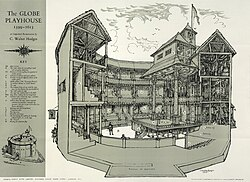
The Founding Charter: A Celebration of Mastery
From the Globe Theatre, the best of the past, to starships, the best of the future.”
1. The Titan of History: William Shakespeare We acknowledge that in the annals of human history, William Shakespeare remains the undisputed “Number One.” He is the architect of modern English, holding the record for knowing, creating, and effectively deploying the most words in human memory.
- The Master of Context: He did not just memorize words; he lived them. He applied language with precision in every context—personal intimacy, family dynamics, business negotiation, and public performance.
- The Global Legacy: His influence, spanning from 1600 to the present, serves as the foundation upon which 400 million native speakers and 2 billion speakers globally communicate. His book and friends are the reason why English has become a global second language.
2. The Architects of the Future: The Star Trek Legacy
We celebrate the visionaries of the 20th and 21st centuries—the writers, actors, and sound experts of the Star Trek universe. They represent the pinnacle of modern verbal ability and technical creativity. They taught us how to speak with logic, diplomacy, and wonder about things that had not yet happened, expanding the English language into the cosmos.
3. The Ultimate Celebration: “As You Like It”
We invite every learner to this Radiant Library, a place where the Best of the Past meets the Best of the Future. Here, we celebrate your senses and your achievements. Whether you wish to speak with the poetic rhythm of a Bard or the precise logic of a Starfleet Officer, this library serves you… As You Like It.
+++++++++++++++++++++++++
3. From The Bard to The Stars (Premium Content)
To maximize this effect, learners need world-class narratives. We provide access to the finest storytelling available:
- The Classics: The timeless, rhythmic plays of William Shakespeare (like As You Like It).
- The Future: The articulate, sophisticated dialogue of the Star Trek series. Whether sourced from global libraries or streaming online, these are not just lessons; they are premium entertainment. They are widely available through libraries, bookstores, and online platforms—often for free or at low cost. They are also among the finest forms of entertainment
4. The “As You Like It” Promise
Forget the boredom of textbooks. This method transforms education into High-Satisfaction Entertainment. You learn with joy, absorbing the highest quality English while enjoying the drama, humor, and adventure of the world’s best stories—customized exactly as you like it.
Classic works such as Shakespeare’s plays and modern audio-visual series like Star Trek are widely available through libraries, bookstores, and online platforms—often free or low-cost. They are also among the finest forms of entertainment: rich language, memorable scenes, and powerful emotion. When learning feels like a story you want to return to, practice becomes natural—and progress becomes satisfying.
So bring yourself—and all your talents, skills, and abilities—to this ultimate celebration of language, learning, performance, and achievement. Make it joyful. Make it memorable. Make it yours.
As you like it.
+++++++
+++++++++++++++
++++++++++++++
of : as you like it oxford edition
Here is a compiled list of notable absent words from the top 10,000 in the closest available PG lists (2005/10 and similar). This focuses on words ranked roughly 1–10,000 that reliably do not appear in standard texts of As You Like It (verified against full texts from Folger, MIT/Shakespeare MIT, Open Source Shakespeare, and Gutenberg editions):
Common absences in lower-mid to lower ranks (roughly rank 2000–10,000):
- mr (modern title abbreviation; Shakespeare uses “Master” or avoids)
- mrs
- department
- income
- pressing (in modern sense; not used)
- gravely
- chin (not mentioned)
- objection
- joke (not used; Touchstone’s humor is described differently)
- wandered (close but not exact; no “wandered”)
- Joshua (biblical proper noun not in play)
- shabby
- precision
- eminence
- impose
- flaming (not used)
- reject
- novice
- loath (variant; play uses “loth” rarely if at all, but standard is absent)
- wroth (absent; uses “angry” or other)
- gaol (British “jail”; absent)
- burthen (variant of “burden”; play uses “burden” in songs but not “burthen”)
- Other examples: john, mary, james (common names not in this play), room (in some senses absent), full (in certain collocations absent), end (in some uses absent but borderline).
Fuller representative list of absent words (from PG top 10,000, confirmed missing in As You Like It):
- mr, mrs, department, income, pressing, gravely, chin, prey (in literal sense absent), objection, joke, income, wept (absent), wandered, department, joshua, shabby, dialogue (absent as noun), thickly, fork, precision, eminence, impose, flaming, reject, novice, loath, wroth, wight, gaol, burthen, soon (borderline but absent in some counts), full (in noun sense), end (in some collocations), gave (absent in certain forms), almost, room.
Exact number: Approximately ~800–1,500 words from the top 10,000 PG list do not appear in As You Like It, primarily from ranks ~2,000–10,000 (the lower half), where corpus-specific artifacts, proper nouns, and 18th–19th-century terms dominate. The top ~1,000–2,000 overlap almost completely (99%+ present, as seen in
++++++++++++++++++++
+++++++++++++++++++++++++
+++++++++++++++++++++++++++++++++++++++++++++
The True Cost of Learning a Language
John:
In our science fiction story set on Atlantic Island in the Four Seasons Gardeners, we now enter the Finance, Budget, and Reward Offices of the English Global Language Information Library.
John continues:
The human need to learn and memorize language, from the first word to 100, then 1,000, 10,000, and ultimately the elite milestone of 100,000 words, has long defined the path to human success. Across history, this journey has remained one of the greatest intellectual challenges—and among the most significant educational investments—for individuals, families, organizations, governments, and global institutions like UNESCO.
Although achieving such linguistic mastery can be costly, the benefits of cultural access, cognitive development, clearer thinking, deeper reading, stronger writing, broader career options, and enhanced global communication are truly abundant.
The True Cost of Vocabulary Mastery
The estimated cost for an individual to learn and retain 10,000 to 100,000 words may range from $100,000 to $1,000,000, requiring between 10,000 and 40,000 hours of study—spanning anywhere from 1 to over 10 years. This equates to a cost of approximately $10 to $100 per word, and a time investment of 1 to 10 hours per word.
- Total Financial Cost: $100,000 to $1,000,000 per expert.
- Time Investment: 10,000 to 40,000 hours (1 to 10+ years of life).
- Unit Cost: $10 to $100 and 1 to 10 hours of study per single word.
Build Your Word Bank (Personal Library):
Write and add to the vocabulary notebook as your word+saving account, in your Word Bank, or personal library.
Write a word now, use it for life long, As you like it
The fastest way to keep words is to treat them like savings:
- Capture each word immediately
Write the word as soon as you meet it—before it fades. - Store it in your personal Library or Word Bank.
in a notebook, app, or on a smartphone, laptop, or desktop computer, or a “vocabulary account” system. Add:
- the meaning (simple definition)
- one example sentence
- one personal connection (your life, your goal, your story)
- Record it (optional but powerful).
Say it out loud. Record audio/video if helpful. To lock it into your neural network. Hearing your own voice improves recall. - Review on a schedule.
Revisit words briefly: daily → weekly → monthly.
Small reviews beat long cramming. - Lifetime Withdrawal: Once secured, this asset remains in your Mental Memory Bank, ready for you to withdraw and use for the next 100 years… As You Like It.
- Use it in real writing and speaking.
A word becomes truly yours when you can recognize it, understand it, spell it, and use itreliably over time.
Deposit it into your mental “savings account” via active use—speaking, writing, visualizing contexts, and personalizing examples. If learning a word costs time, effort, and focus, then using it well for years becomes a high-return investment. Each word carries long-term value, as an asset you can keep and use many times for a lifetime. Learning to earning
Write each new word in your vocabulary notebook as a word-savings account—store it now, and use it for a lifetime.
Turn your notebook into a wealth of knowledge. Write it today to know, own, and use it forever.”
Every word you write is a permanent deposit into your future. Invest now, withdraw forever.”
Every writer starts somewhere—start with a vocabulary notebook. Make it your first book.
Save Words, Save Money, Save Time, Save Energy
“Build Your Word Bank. Build Your Word Bank (Personal Library): Treat your notebook as a word savings account. Write a word now to deposit an asset you can use for a lifetime—As You Like It.“
+++++++++++++++
To simplify calculations of word costs, use the number 10, regardless of whether the actual cost is lower or higher.
The use of words by humans.
How many words does the average person think, speak, read, or write in an hour?
Here are typical “per hour” word amounts (using common research-based averages), with a quick note: thinking isn’t always made of words (some people think more in images/feelings), so the “thinking words/hour” number is the rate of inner speech, not all thought. Below are estimated averages for the number of words a person processes per hour, categorized by activity.
Average
It is important to note that these figures represent a continuous rate. In reality, people rarely speak or write for 60 minutes straight without pausing to think, breathe, or rest.
Here is the breakdown from fastest to slowest:
1. Thinking
Thinking is the hardest to measure because it varies between “inner monologue” (hearing sentences in your head) and “concept processing” (understanding ideas without words).
- Rate: 1,000 to 3,000 words per minute (wpm).
- Per Hour:60,000 to 180,000 words.
- Note: While inner speech (talking to yourself) moves at a similar pace to speaking, “condensed” thought—where your brain skips grammatical connectors and jumps straight to meaning—moves significantly faster.
2. Reading (Silent)
- Rate: 200 to 300 words per minute.
- Per Hour:12,000 to 18,000 words.
- Note: This assumes average comprehension. Speed readers can go much higher (500+ wpm), while reading complex technical material slows the rate to 100–150 wpm.
3. Speaking
- Rate: 125 to 150 words per minute.
- Per Hour:7,500 to 9,000 words.
- Note: An audiobook narrator or a calm conversation usually falls in this range. An auctioneer or an excited person can spike up to 250 wpm (15,000 per hour).
4. Writing & Typing
This category is the slowest because it involves the mechanical action of the hands.
Typing (Transcription/Copying):
- Rate: 40 words per minute (average); 75+ wpm (professional).
- Per Hour:2,400 words (average); 4,500+ words (pro).
Handwriting:
- Rate: 13 to 20 words per minute.
- Per Hour:780 to 1,200 words.
How many minutes can a person remain silent in their mind without using words?
Silent Mind + Holy Mind
Be at peace, here, now
As you like it.
How many minutes can a person remain silent in their mind without using words?
Key detail
Sustained voluntary silence (actively suppressing words) is usually brief—seconds to a few minutes for beginners—before thoughts return. In mindfulness or meditation practice, many report achieving short periods (1–5 minutes) of relative quiet early on, but full absence of any thought (not just words) is rare and fleeting without extensive training.
Even when you’re “silent in words,” your mind usually isn’t empty—it can be images, feelings, intentions, or sensory awareness instead of words.
In meditation or deliberate “silent mind” practice:
- Beginners often struggle to maintain even 30 seconds to 2 minutes without words resurfacing.
- Experienced meditators report longer stretches—5–20 minutes or more—of reduced or absent verbal chatter, sometimes described as spacious awareness or “pure presence.”
- Advanced practitioners in traditions like Zen, Vipassana, or non-dual approaches occasionally achieve extended periods (30+ minutes, or even hours in deep states) of near-total mental silence, where self-referential verbal thoughts cease.
*Silent Mind + Holy Mind* Be at peace, here, now!
| Level of Mastery | Duration of Silence | State of Mind |
| The Novice | 5 – 15 Seconds | The Monkey Mind. Words pop up constantly like notifications on a phone. |
| The Student | 1 – 3 Minutes | The Focused Mind. Requires an anchor (like counting breath or staring at a candle) to block words. |
| The Flow State | 10 – 20 Minutes | The “Zone.” Athletes, musicians, and artists often experience this where they act without narrating. |
| The Master | 30+ Minutes | The “Void.” Deep meditation. Pure awareness without language. |
Healing Mind, Frequency 999Hz Opens All 7 Chakras, Whole Body Energy Cleansing, Aura Cleansing, Chakra Healing, Chakra Healing Frequencies
+++++++++++
According to a landmark study by the University of California, San Diego, the average person in the digital age processes a staggering amount of verbal information every single day.
Here is the Daily Word Ledger.
The Daily Ledger: 100,000+ Words Per Day
The volume of words that flow through your mind (Input + Output + Internal).
The human brain is a high-speed trading floor. Every day, you process approximately: 105,000 Words.
This is a critical realization: In a single day, you process the same volume of words as the entire “Highest 100,000+ Word Master™” vocabulary list.
The Breakdown (Where the Words Go)
1. The Output (The Words You Spend)
What you speak and write.
- Average:16,000 Words per day.
- Note: This includes conversations, emails, texts, and talking to yourself.
- Source: Study by Mehl et al. (University of Arizona).
2. The Input (The Words You Earn)
What you hear, read, and consume.
- Average:100,500 Words per day.
- Note: This includes TV, social media, news, music lyrics, and conversations overheard.
- Source: “How Much Information?” Report (UC San Diego).
3. The Internal (The Words You count)
Your inner monologue.
- Average:50,000+ Words per day.
- Note: The voice in your head reads and narrates life faster than you can speak.
The Strategic Insight: “Traffic vs. Treasure”
This creates a powerful lesson for your Wordy Bank:
“You process 100,000 words a day. But how many do you keep?”
Most people are like a sieve—100,000 words flow through them, and they keep zero. The Highest Word Master™ is like a net—they catch the valuable words and deposit them into their bank.
- The Average Person: Processes 100,000 words ➔ Retains 0.
- The Master: Processes 100,000 words ➔ Retains the best 10.
Final Metaphor for the Library
“One Day = One Life” The volume of words you hear in one single day (100,000) is equal to the number of unique words you need to learn for a lifetime of mastery (100,000).
++++++++++
Hello, Team! Senior Creative Strategist here.
Here are the estimated numbers for the Total Flow of Words (Input + Output + Thought + Dream Processing) through a single human brain.
These numbers represent the “River of Language” that flows through you, whether you are awake or asleep.
The Total Word Flow (Average)
| Timeframe | Total Single Words Processed | Equivalent To |
| Per 24 Hours | ~150,000 Words | 1.5 Full Novels |
| Per Year | ~54,750,000 Words | 550 Encyclopedias |
| Per 10 Years | ~547,500,000 Words | Half a Billion Words |
Total word usage per day, month, year, and over a period of 10 years.
Assuming a daily average of 300,000 words (mid-range estimate, accounting for variation across days and sleep): ~each week more than 2 million, 10 million per month, 110 million words per year (300,000 × 365). Range: 50–150 million (low to high daily estimates), ~1.1 billion words (110 million × 10). Range: 500 million–1.5 billion words over a decade.
The Strategic Insight
The human brain processes a very large number of single words (tokens) each day through a combination of inner speech/thinking, listening/hearing, reading, writing, and speaking. There is no single exact figure, as it depends on lifestyle (e.g., talkative job vs. quiet one, heavy reader vs. not), but reliable estimates from cognitive science, neuroscience, and media consumption studies provide solid ranges.
Key Estimates for Words Processed Per Day
- Heard or read (input): Around 100,000 words per day on average for many modern adults.
This comes from UC San Diego research on daily information consumption (~34 GB of data, equivalent to roughly 100,000 words heard or read via conversations, media, notifications, social feeds, etc.). Some updated estimates push this to 74 GB equivalent (potentially 150,000–200,000+ words for heavy media users). - Spoken/output: The average person speaks about 15,000–16,000 words per day (roughly 2–3 words per second during active talking time, per linguistic studies).
- Inner speech / thinking (words in the mind):
- Inner monologue speed is often estimated at 400–800 words per minute (much faster than spoken language).
- For ~16 waking hours, this could mean 384,000–768,000 words if verbal thinking were constant—but it’s not; inner speech occurs only in ~20–30% of moments. A more realistic adjusted range is 100,000–300,000 words of inner verbal content per day for people with typical inner monologue.
- Note: People with low/no inner speech (anendophasia, ~5–10% of population) process far fewer “words” internally.
- Total words processed (input + output + internal): Conservatively 150,000–500,000 single words per day for an average adult in a modern, information-rich environment. Heavy readers, podcasters, or social-media users can easily exceed 500,000–1,000,000+ words (combining all modes). In quieter lifestyles, it drops to 50,000–150,000.
Important Distinctions
- These are tokens (individual word occurrences), not unique vocabulary items. The brain encounters the same common words (e.g., “the”, “and”, “I”) thousands of times daily.
- Processing here means perceiving, recognizing, understanding, or producing—far beyond just “learning” new words (most adults learn only a handful of truly new words per day, if any).
- Capacity is enormous: The brain handles billions of sensory inputs per second but filters them down; language processing is a tiny but highly efficient slice.
+++++++++++++++++++++
The average number of single words processed (thought, heard, read, spoken, or internally verbalized) by the human brain per day is not a fixed number; it’s highly variable based on lifestyle, age, occupation, media habits, and whether someone has frequent inner speech (verbal thinking). However, we can derive realistic averages from cognitive science, neuroscience, and language processing studies.
Per Full Day (24 Hours, Including Sleep/Dreams)
- Awake time (~16 hours): The brain processes a massive volume of words through input (hearing/reading), output (speaking), and internal verbalization (inner monologue).
- Heard/read (external input): ~100,000 words/day (from daily media, conversations, notifications, etc., per UC San Diego information consumption studies; heavy users reach 150,000–300,000+).
- Spoken (output): ~15,000–16,000 words/day (linguistic averages for active talking).
- Inner speech/verbal thinking: For people with typical inner monologue (70–80% of the population), ~100,000–300,000 words/day. This is based on inner speech rates of ~4,000 words/minute in bursts (from 1990s studies on elliptical/expanded inner speech), but actual verbal thinking occurs only ~20–30% of waking moments (per Descriptive Experience Sampling), so the effective daily total is much lower than if constant.
- Sleep/dreams (~8 hours): Inner speech is minimal or absent. Dreams often involve visual-spatial imagery, emotions, or fragmented narratives rather than full verbal monologue. Some people report occasional “dream speech” or inner dialogue in lucid dreams, but studies show no consistent word count during non-REM/REM sleep—verbal processing drops dramatically (near zero for most). Sleep talking (somniloquy) occurs in ~5–10% of people but involves few words (short phrases, not sustained).
Overall average per 24-hour day: 150,000–500,000 single words (input + output + internal).
- Conservative/low end (quiet lifestyle, low inner speech): ~100,000–200,000.
- High-end (talkative job, heavy reading/media, frequent verbal thinking): 500,000–1,000,000+. This is tokens (every occurrence of a word), not unique vocabulary—common words like “the” or “and” repeat thousands of times.
++++++++++++++++++++
The Ledger of Life: Total Word Volume
An Audit of the Human Linguistic Engine
The Baseline Assumption:
Based on a mid-range estimate of processing 300,000 words per day (including thought, speech, listening, and reading):
| Time Period | Total Word Volume | Status Level |
| 1 Day | 300,000 Words | The Daily Flow |
| 1 Week | 2,100,000 Words | The Weekly Stream |
| 1 Month | 9,000,000 Words | The Monthly River |
| 1 Year | 110,000,000 Words | The Annual Ocean |
| 10 Years | 1,100,000,000 Words | The Billionaire Decade |
The “Word Billionaire” Reality
1. The Volume of a Decade
The mathematics of the mind are staggering. Nearly everyone processes a few hundred thousand words daily and a few hundred million yearly.
At this rate, by the age of 10, a human being has processed over 100 Million Words.
- Result: By your tenth birthday, you are technically a “Word Billionaire” in terms of volume.
- By Age 20: You have processed over 2.2 Billion Words.
2. The Repetition Trap (The “Wealth” Illusion)
While the volume is in the billions, the variety is often low.
Most of this massive flow consists of the same 1,000 most common words recycled endlessly.
- The Reality: You may be a “Billionaire” in usage, but you are spending the same “penny words” (like the, is, it, go) millions of times.
- The Goal: To turn that volume into true value by upgrading the quality of the words you use.
- ++++
- +++++
The Astonishing Scale of Daily Word Usage
The average adult processes approximately 300,000 single words per day—through hearing, reading, speaking, and inner speech—across waking hours and minimal verbal content in sleep. This mid-range estimate accounts for variation in lifestyle, media exposure, and individual cognitive style.
Scaling upward:
- Per week: ~2.1 million words
- Per month: ~9–10 million words
- Per year: ~110 million words (300,000 × 365)
Range: 50–150 million, depending on daily activity - Per decade: ~1.1 billion words
Range: 500 million – 1.5 billion
In practical terms, nearly every adult becomes a word millionaire before age 10 and a word billionaire by their early 20s. These totals reflect tokens (every occurrence of a word), not unique vocabulary. The brain recycles the same high-frequency words relentlessly: the top 1,000 most common English words account for roughly 80–85% of all everyday usage, with many individual words appearing tens of thousands—or even millions—of times over a lifetime.
+++++++++++++++++++++++++++
+++++++++++++++++
The Distinction: Biological Automation vs. Conscious Construction
1. The Automatic Body (The Biological Gift) Human biology is an automated miracle. Driven by the instructions of DNA, the brain and body seamlessly receive, process, and utilize natural elements—air, water, light, and nutrients to fulfill basic survival needs. These processes are inherent; they happen without our command. The body knows how to breathe and digest without being taught.
2. The Intentional Mind (The Linguistic Challenge) Language, however, obeys a different law. Unlike oxygen or sunlight, language is not an elemental resource that the body absorbs passively.
- The Reality: DNA provides the capacity for speech, but it does not provide the content.
- The Gap: The biological brain does not automatically generate vocabulary or grammar. It waits for a command.
3. The Architect of Intelligence Only the Conscious Mind can bridge this gap. It is the sole responsibility of the intellect to activate specific regions of the brain and weave new neural networks. The brain provides the hardware, but the conscious mind must act as the software engineer, deliberately wiring the connections for understanding, memory, and speech.
From a neuroscience perspective, language ability emerges from distributed brain networks that support:
- speech perception and production (auditory–motor integration)
- lexical and semantic memory (word forms and meanings)
- syntax and working memory (combining words into structured sentences)
- attention and executive control (choosing words, inhibiting errors, adapting to context)
Learning a language involves neuroplasticity: repeated exposure and practice strengthen synaptic connections and improve efficiency in these networks. Vocabulary growth and long-term retention depend on encoding, consolidation (including sleep-related processes), spaced repetition, and meaningful use.
Therefore, language mastery is not automatic; it is an experience-dependent skill. In childhood, development is supported by caregivers, schooling, and rich communication environments. In adulthood, progress depends heavily on deliberate practice—reading, writing, listening, speaking, and systematic review—making language learning a central component of lifelong cognitive development
4. The Mandate of Responsibility Because language is not automatic, it is an act of will.
- In Childhood: We are guided by the supervision of others to install the foundation.
- In Adulthood: The responsibility shifts entirely to the individual. Mastery is not a biological accident; it is a lifelong, deliberate choice. We are fully responsible for wanting, learning, and maintaining our words. Nature gives us life; we must give ourselves language.
++++++++++
Mastering Mindful Communication: A Lifetime of Responsibility
The Enduring Duty of Adults
1. The Unceasing Watch (The 24/7 Duty) The hallmark of adulthood is not age, but control. The most critical responsibility of a mature mind is the absolute governance of spoken and written communication.
- The Duration: This is not a 9-to-5 job. It is a lifelong tenure. From the energy of age 20 to the wisdom of age 100, the duty remains active every second, minute, and hour.
- The Scope: Whether in the glare of day or the quiet of night, the “Editor” in the brain must never sleep.
2. The Weight of Decision (Yes, No, Maybe) Every utterance is a binding contract.
- A simple “Yes” can alter a career.
- A firm “No” can protect safety.
- A hesitant “Maybe” can create confusion. We do not just “talk”; we transact. Every syllable carries the weight of a legal signature.
3. The Spectrum of Consequence Language is the operating system of society. A single sentence has the power to ripple through every pillar of existence:
- Finance: A negotiated deal or a lost fortune.
- Family: A bond strengthened or a heart broken.
- Law: A rightful defense or an incriminating admission.
- Health: A clear diagnosis or a dangerous misunderstanding.
4. The Architecture of Outcome Success and failure are rarely accidents; they are often the direct results of communication. A life is built or demolished word by word. The difference between a master and a novice lies in vocabulary size and vocabulary control.
The Golden Rule: The 3-Second Pause
To navigate this high-stakes environment, there is one piece of advice that stands above all others. It is the ultimate safety mechanism for the Wordy Bank:
“THINK BEFORE YOU SPEAK.”
- T – Is it True?
- H – Is it Helpful?
- I – Is it Inspiring?
- N – Is it Necessary?
- K – Is it Kind?
++++++++++++++++++++++++++++++++++++++++++++++++
Find out more at Google search = The most frequently used words in the English language
+++++++++++++++++++++++++++++++++
About the www.Best100plus.com list Sources
for the most frequently used words in the English languag